
Get Social 


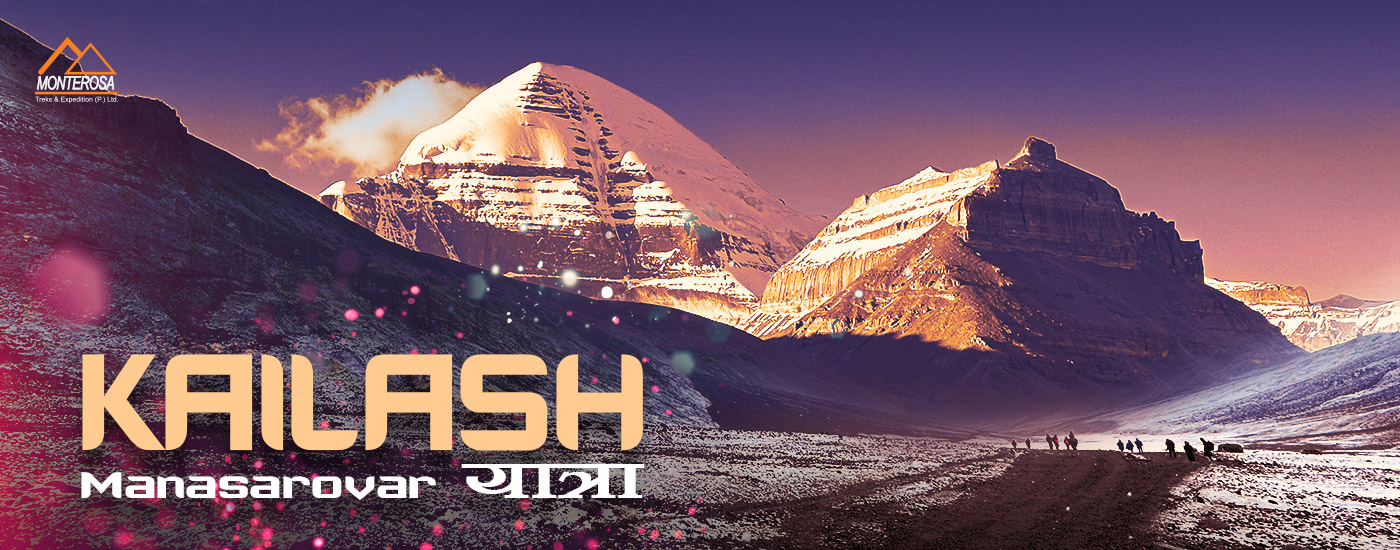
The round-trip journey includes cultural sightseeing in Lhasa, Shigatse, and Gyantse, a visit to Lake Mansarovar, and a sacred Kora (circumambulation) around Mount Kailash. The Mount Kailash tour from Lhasa to Lhasa covers approximately 2,400 kilometers overland. Mount Kailash Parbat 6714 meters high, was a popular destination for Buddhist, Jain, and Bonpo religious founders in ancient times. This peak is revered by Hindus and Buddhists all over the world, while Jain believes their first saint acquired liberation here, and Lord Shiva and his wife Parvati are believed to have occupied Mount Kailash. Buddhists make the journey to spread peace and attain enlightenment, while Hindus travel to Kailash to seek salvation.
In Vajrayana Buddhism, Kangri is the home of the Demchok, who represents supreme bliss. Tibetans call Manasarovar Lake Mapam Yumtso, which lies just beside Mount Kailash. In Sanskrit, "Manas" means mind or consciousness, and "Sarovar" means lake, so it is called the Lake of Consciousness. It is considered by Hindus to be the bathing lake of Lord Shiva and Goddess Parvati, and the Circumambulation Lake purges the soul of sins and the body of illnesses. The Buddhists also believe that Mapam Yumtso is the place where Buddha's mother Maya gave birth to him in Lake Anavatapta.
Sacred Sites: Hindus, Buddhists, Jains, Shikhas and Bonpo as well as Lake Manasarovar consider it sacred.
Physical Moderate Challenge: A Yatra is certainly a moderately challenging journey, requiring travelers to demonstrate physical, mental and spiritual endurance. On foot or by pony, Kailash's Kora stretches 53 kilometers (33 miles), while surfaced roads cover 15 kilometers.
Eligibility: Pilgrims must be in good health, have a valid passport for at least seven months, be at least nine years old, and not be older than 79. (Indian passports are not accepted)
Best Time to Visit: From May to September is the best time to hold yatras, when temperatures are mild and not too cold, making them safer and more comfortable.
 Watch Kailash Tour Video
Monterosa Treks & Expedition makes a very pleasant and smooth Yatra in Nepal every year. You are welcome to join us for this trip and benefit from our best services. Please accept my warmest welcome.
Professional Staff: Our company organizes the Kailash Mansarovar Yatra every year under the leadership of professional guides, cooks and team leaders. Leaders, cooks, and guides who are experienced can conduct pilgrimages to Holy Kailash Manasarovar. We look forward to having you aboard the Kailash Manasarovar Yatra with Monterosa Treks and Expeditions Private Limited.
Accommodations for the Kailash Yatra in 2027: Our hotels in Lhasa and Shigatse are the only places for us to have breakfast during the Kailash Manasarovar Yatra. The Shangri-La Hotel and the Marriott San Regis Lhasa Resort are two hotels in Lhasa. In Shigatse, Gesar Hotel is a 5-star establishment, while Saga and Darchen Hotel is a 4-star establishment, and there are dormitories at Manasarovar Lake, Dirapuk and Zuthulpuk.
Meal Plan for Kailash tour 2027: In Lhasa and Shigatse Tibet, we can only have breakfast in our hotels during the Kailash Manasarovar Yatra. We will serve Nepalese restaurant buffets for lunch and dinner as well as Alakat Nepalese and Indian meals. Alakat Nepalese and Indian food will be served for lunch and dinner, along with Nepalese restaurant buffets.
We can schedule your preferred date if the dates don't work with your travel plans, but we must have a minimum of 25 participants. If fewer than 25, you must take part in the fixed departure.
Medical MBBS Doctor: An excursion to Kailash Manasarovar with Monterosa Treks and Expedition Pvt Ltd includes a physician Doctor and medicine. A physician and medicine are included in an excursion to Kailash Manasarovar. While traveling from Saga or before Kailash Manasarovar Yatra, doctors usually check blood pressure and oxygen levels. As part of the group, Kailash Kora and Kailash Yatri will be joined by a doctor from Kathmandu. A sufficient supply of oxygen tanks and mask regulators will be provided for the trip to Kailash Manasarovar. Additionally, there is an oxygen tank located underneath the bus, in addition to the oxygen tank on its surface and the mask regulator inside. In 2024 AD, the Kailash circle started providing doctors to its members, and 95% of them remain healthy today. All your lifetime dreams and accomplishments will come true during your Kailash Manasarovar Yatra.
Rudrabhishek and Rudra Hawan at Manasarovar: Kailash Manasarovar Yatra includes a religious ceremony known as Rudrabhishek (True Blessing) and Rudra Hawan. It is customary to hold celebrations on the full moon day (Purnima day), either in the evening or in the morning of the next day. It is an auspicious day on both days. This ritual is performed in Nepal to invoke Shiva's blessings, purify participants from sin, and promote spiritual prosperity and well-being.
A Spirituals: It is possible to sanctify Shiva Lingas by pouring milk, honey, and water over their surface and chanting mantras over them. It is also possible to bathe the Shiva Linga in holy substances (Rudrabhishek) and burn it with ghee, grains, and herbs.
Rudra Hawan: By placing grains, ghee, and herbs inside a sacred fire, fire rituals symbolize the purification and illumination of the soul.
Purpose: The rituals cleanse participants of their sins, remove obstacles, and bring them health, prosperity, success, and spiritual peace. Good luck comes with them, along with good health, prosperity, success, and spiritual peace.
Timing: A full moon night is considered auspicious, so these ceremonies are usually held in the afternoon, evening, or early the next morning.
Performers: During the Kailash Yatra, pilgrims perform rituals under the guidance of Nepalese Brahman Pandits.
Tother Rituals: Tirth Saradha can be performed privately by a pandit for those who have lost their parents, siblings, family members, or relatives.
Monterosa Treks and Expedition Pvt. Ltd. organize Kailash tour from Lhasa to Lhasa every year May to September.
Locational of the Meeting: You will be welcomed at Gonggar International Airport in Lhasa, Tibet and taken to your hotel by our staff.
10 Sept. 2027 Day 01: Fly to Gonggar Tibet & drive to Lhasa
11 Sept. 2027 Day 02: Sights in Lhasa include Potala Palace
12 Sept. 2027 Day 03: Drive Lhasa to Shigatse 3782m. hotel
13 Sept. 2027 Day 04: Drive Shigatse to Saga 4640m. & hotel
14 Sept. 2027 Day 05: Drive to New Dongba or Prayang town
15 Sept. 2027 Day 06: Drive to Hor and continue Chiu Gompa
Full moon night in Manasarovar Lake
16 Sept. 2027 Day 07: Hindu Rudrabhishek & drive to Darchen
17 Sept. 2027 Day 08: Drive Yam Dwar & start walk to Dirapuk
18 Sept. 2027 Day 09: Trek to Dolma La 5636m. and Zuthulpuk
19 Sept. 2027 Day 10: Walking to Chongdo & drive to Darchen
optional tour to Astapad, drive (5km away) explores south face of
Mount Kailash Parvat -Nandi Parvat, back to Darchen night stay
20 Sept. 2027 Day 11: Drive to Hor, Prayang, Dongba and Saga
21 Sept. 2027 Day 12: Drive from Saga to Shigatse & overnight
22 Sept. 2027 Day 13: Drive Shigatse to Gonggar airport in Tibet
Fly mainland China, fly to home or final destination as follow plan
10 September 2027 (Friday) Day 01: Arrival Lhasa Gonggar airport, the Tibetan tour guide welcomes all Kailash Yatri with Tibetan Khata (white garland). From the airport, everyone is driven to Lhasa city in a minibus or bus. We travel about 62.5 km away from Gonggar airport and it takes about an hour or bit more. We enjoy the amazing views of the naked hills, the settlements at the bottom of the hills and the agricultural land full of crops along the way. Check in at the hotel. Free day
11 September 2027 (Saturday) Day 02: Morning takes breakfast and start sightseeing in Potala Palace. Lhasa is the capital as well as the biggest city of Tibet. This city with wide road ways, sky kissing buildings is not less attractive than any developed western countries. Besides this, the palace of Dalai Lama: The Bharkhor Bazaar itself and Bharkhor surrounding are other worthy and attractive places to visit at Lhasa. Lhasa City is at an altitude of 3,600 meters above sea level. The Potala Palace lies at the central part of Lhasa city and it is situated in a place at 150 meters' height. This palace is also the adjoining place of meditative office building and administrative office building. The Red Palace symbolizes meditation whereas the white Palace signifies transparent administration. In Tibetan language, ‘Lhasa’ means ‘The Land of Gods & Goddesses.
We can see different varieties of magical Buddha idols of Buddhist religion in the red Palace whereas; there are meditation room, living room and meeting room for foreign guests of Dalai Lama in the white Palace. Lhasa city is a valley which is also the adjoining place of two sacred rivers namely, Lhasa and Brahmaputra. According to Buddhists, it is believed that one can obtain ‘Nirvana’ meaning ultimate salvation, by having divine view (Darshan) of Potala Palace and visit at least once in the lifetime.
The Potala Palace was built at the time of Songchang Gampo in the 7th century; the 5th Dalai Lama extended the palace to its present size. At this time, it also succeeds in becoming the residing, the main political and religious palace of the Dalai Lama. The main palace was divided into two sections: the white palace and the red palace. It is 115.703 meters high with thirteen stories, including living quarters, temples, tomb stupas and monk dormitories. The countless cultural relics in the palace are images, murals, sutras, etc, which are of incredible value. These magnificent Tibetan arts and culture are not only classified as national treasure but are also listed by the state council as one unit of the important cultural relics to be specially protected.
There is gold plated entombment place of 5th, 7th, 8th, 9th, 10th, 11th, 12th and 13th Dalai Lama at Potala Palace. All these can be seen besides 13th Dalai Lama’s. Entombment of 6th Dalai Lama is yet unknown and mysterious. Likewise, experts say that the funeral rites of 1st, 2nd, 3rd and 4th Dalai Lama was done at Jokhang Monastery and then the ashes were kept safely there. There are one thousand rooms at The Potala Palace among which 27 rooms are been exposed for general public such as bed room, living room, study room, meeting room & the entombment Place of Dalai Lama. The current 14th Dalai Lama is living in India since from 1959.
12 September 2027 (Sunday) Day 03: After spending two nights at the Lhasa capital city of Tibet, our journey to Kailash Manasarovar begins by traveling in our tourist coach. Overland tours from Lhasa to Shigatse are highly popular, offering spectacular Tibetan landscapes, the historic Tashilhunpo monastery (the seat of the Panchen Lama), and a comfortable experience. In order to participate in these tours, non-Indian passport holders usually need to be members of an organized group of Kailash Manasarovar Yatri. It is best to visit during the pleasant months of May to September.
The Panchen Lama's seat at Tashilhunpo Monastery in Shigatse is a must-see, especially because of the monastery's historical and cultural significance. It is the 2nd biggest city after Lhasa. There are fine Luxury hotels for lodging and we have arranged meal for our pilgrims in a Nepali Restaurant. Here is a huge monastery which is popularly known as Tashilimphu Monastery. The section from Lhasa to Shigatse is around 271 kilometers and it takes 4 to 5 hours’ drive.
13 September 2027 (Monday) Day 04: Morning take breakfast and drive to Saga via Lhatse, the journey today passing 2 high passes with fine view of country side in Tibet. Shigatse to Lhatse is 160KM road able distance and takes 3 hours. We do stop for Lunch. After lunch towards Saga, here divide 2 roads and one go to New Tingri way to Everest Base camp and another road goes to Saga directly which is we are fallowing the sandy and rocky land Tibet. Other thinks like Lake, nomad chasing thousands of Yaks and Sheep grazing grass on the way Saga Bazaar. Lhatse to Saga is 300KM and takes 5 hours driving. Reach Saga, check hotel and Overnight Saga.
Watch Kailash Tour VideoTeam Leader, guides staff and food: The Kailash Manasarovar Yatra / tour is taken from Lhasa route from Kathmandu with Nepali team leader, guide or If the tour starts from Lhasa - Kailash – Lhasa who comes direct home country via mainland China. The Nepali team leader and tour guide will arrive in Lhasa before Kailash Yatri lands and is received at Gonggar airport. Delicious pure vegetarian meals are provided at Lhasa city, while the meals in Shigatse will be provided at Nepali restaurants every day. We meet all Nepali staff in Saga including the chef and team members of staff who will travel by road from Kathmandu. From Saga and onward, Monterosa Treks and Expedition Pvt. Ltd. staff makes delicious pure vegetarian food breakfast, lunch and dinner for all Kailash Manasarovar Yatri.
14 September 2027 (Tuesday) Day 05: The Tibetan / Chinese tourist bus takes approximately three hours 160km to travel from Saga to New Dongba. The distance between New Dongba and Prayang is 95 kilometers along the G219 National Highway. The bus ride takes two hours. New Dong to Prayang city is about two hours away from New Dong due to the road's high-altitude plains and scenic Mayumla Pass region. Our hotel will either be New Dongba or Prayang, depending on the occupancy of the hotel. As you drive from Saga to New Dongba and Prayang, you pass through the stark Tibetan plateau.
The remote Trans-Himalayan region is home to nomadic lifestyles, traditional yak-herder camps, ancient chortens, vibrant prayer flags, and a deeply spiritual atmosphere. The Brahmaputra River and Mount Shishapangma are sacred geographical landmarks and spiritual landmarks along Tibetan and Himalayan pilgrimages. Road travel from Saga to New Dongba or Prayang can take up to 6 hours, covering approximately 255 kilometers. There are bumpy or unpaved sections on the route, especially in the immediate vicinity of towns or during seasonal melts, but the route generally traverses high, arid, and scenic Tibetan plains on well-paved high-altitude highways.
15 September 2027 (Wednesday) Day 06: Tibetan / Chinese tourist buses take approximately three hours from Saga to New Dongba 160km. New Dongba to Prayang is 95 kilometers by the G219 National Highway and another two hours by bus. Traveling from New Dong to Prayang city typically takes about two hours due to high-altitude plains and scenic Mayumla Pass. We will stay in New Dongba or Prayang depending on hotel occupancy. As you drive from Saga to New Dongba and Prayang, you pass through the Tibetan plateau.
The tour introduces you to a nomadic lifestyle, a traditional yak-herder camp, ancient chortens, vibrant prayer flags, and a deeply spiritual atmosphere that is characteristic of remote Trans-Himalayan regions. Brahmaputra River and Mount Shishapangma are sacred geographical and spiritual landmarks along Tibetan and Himalayan pilgrimages. The distance Prayang to Manasarovar Lake Chiu Monastery approximately 220 kilometers, and it takes four hours to travel there by road. There are many well-paved, high-altitude highways along the route, but some sections are bumpy or unpaved. Overnight in Manasarovar Lake. Full Moon night in Manasarovar Lake.
The Manasarovar Lake: Manasarovar Lake, also known as Brahma’s Lake or Mapam Yum Tso Lake is situated at an elevation of 4850 meters above sea level. The word “Manas” means mind or consciousness and Sarovar means Lake. It has held deep spiritual influence and wide religious values among Hindus & Buddhists. Making round of the Lake and taking a holy bath in it is believed to purge one’s soul from sins and the body from sickness. Ancient Hindu scriptures indicate this Lake as a must visit place for someone who wants to attain salvation - the highest level of achievement in Hindu religion. The cascading waves of the Lake in the wind look very charming.
As described in Ramayana, it is said that the person who moves around the Manasarovar Lake and baths with its pure water, reaches the heaven directly after death. Similarly, it is written that the person, who drinks the water of this lake, recognizes the “Shivalok” the palace of Lord Shiva. Kailash Parbat is situated about 58km. far in the north from Manasarovar Lake. Brahmaputra River flows from eastward of the Manasarovar Lake. So, many people who want to visit Kailash Parbat and Manasarovar Lake at least once in their life.
According to Hindu traditional hearsay, it is believed that Lord Shiva and Goddess Parvati take bath each day at 2 AM to 4 AM in this Lake as well as stars also come for bath in Manasarovar Lake. It is said that pilgrims who stay at this place at night; they can lively watch the God there. Mainly it is believed that people can see or visit the God Shiva and Goddess Parvati at the night of full moon. This Manasarovar covers a very large area that is pure place, it is mentioned in Hindu religious books that all the Hindus must reach there at least once in their life time.
Holy Hot Springs Place of Traditions: Chiu Monastery, a monastery located near Lake Manasarovar, has natural hot springs at its bottom. The thermal springs at Chiu Gompa offer ritualistic bathing and spiritual renewal. Sacred lakes provide cleansing, but the thermal springs are believed to be healing. It is now protected by Tibetans, who have built a small bath house and set up a payment system for hot springs.
Rakshas Tal (Demon King Ravana Lake) Sarovar: This lake is named on the basis of Hindu traditional story. Hindu people believe that carnivorous monsters are hiding into the dark water. On the basis of this belief, people called it Rakshas Tal and stay away from this lake believing it as the symbol of dark and destructive power. According to the traditional religious story, the water of this lake is poisonous and fatal. So, to replace the poisonous water of this lake a tunnel was made from Manasarovar Lake. The pure water of this lake & a golden fish was sent in this lake. Late, this fish was found alive.
From it, people’s negative attitude towards the lake changed and they started to go nearer to it but they still don’t drink the water. According to Hindu mythology, in Treta Yug the monster Ravana has made Lord Shiva happy meditating in this Lake. Rakshas Lake lies in the west to Manasarovar Lake. It is situated at an altitude of 4,540meter above the sea level. In Manasarovar Lake, there are many birds including ducks but in Rakshas Lake (Demon King Ravana) there are no any birds at all.
Khojarnath, a small Tibetan village 85 kilometers south of Lake Mansarovar, is the location of the Khojarnath temple. In the Treta Yuga, Rama, Sita Mata, and Lakshmana spent a night here while traveling to Kailash Mansarovar. The Temple of Khojarnath was built in the seventh century, and in memory of such a journey, it has idols of Rama, Sita Mata, and Lakshmana. Pujas are held here every day. There are images of Rama, Sita, and Lakshman in this temple after traveling 170 kilometers from Mansarovar Lake. To get to the temple, you have to make a round trip of 170 kilometers by Jeep. The temple is in the Tibet Autonomous Region of China.
16 September 2027 (Thursday) Day 07: Today Morning, we do Rudrabhishek, Hawan and Arati after holy Bath. You can do these rituals with fasting or without fasting. Nepali Pandits perform Rudrabhishek, Hawan, and Aarti pooja at Manasarovar Lake. In order to purify oneself and gain Lord Shiva's blessings, one prays, chants Shiva mantras, and performs rituals like Tarpan (offering holy water). Rudrabhishek, Hawan. These ancient rituals, involving prayers, chants, and offerings to the sacred fire, are typically performed during the Kailash Manasarovar Yatra. It is considered highly auspicious and spiritually potent to visit Lake Manasarovar during a full moon night. In addition to enhancing the lake's spiritual energy, the reflection of the full moon on its surface is believed to offer pilgrims and visitors a powerful and sacred experience. In 2018 AD, pilgrims will no longer be able to take holy dips in Lake Manasarovar. Take Lunch and drive to Darchen and stay overnight.
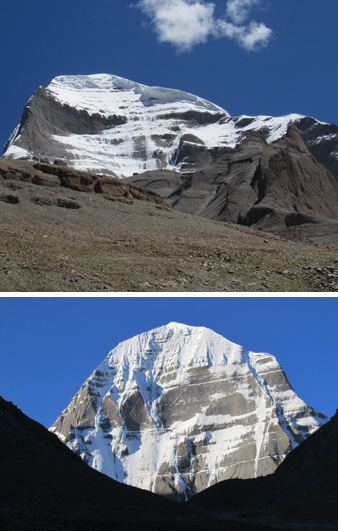
Mount Kailash: The Scared religious place, Kailash Parbat is located on the height of 6714meters above sea level. This region is supposed to be the purest religious place. It is supposed to be the central part of the world and origin of the world before the origin of Hinduism, Jainism and Buddhism. Kailash Parbat is glorified in the holy books like Ramayana and Mahabharata. According to the ancient Asian stories, the civilization is incomplete without the description of Kailash Parbat. Kailash Parbat is located in Tibet. Scientific research of this region is not satisfactory. This religious Parbat is extended from Brahmaputra in the east to Karakoram in the west.
Different religious groups like Shaiba, Hindu, Buddhist, Jain and Bon-Po are respecting Kailash equally, though they explained it differently. In the Shaiba and Buddhist traditional literature, Kailash is described as the part of Sumeru which is supposed to be the center of the world. It is believed to be the residence of Lord Shiva and his wife Parvati as per Hindus. Buddhist respects it in the name of Kang Rimpoche. Buddhists have accepted Kailash and Manasarovar as great natural Mandala. Mandala for them is the means of respect and salvation, Jain worship as Astpada for this isolated peak.
The founding father of this religion Rishavadev had got spiritual salvation in the same place.
There are various logics to claim this Parbat as sacred. This isolated Parbat is also source to big rivers like Brahmaputra, Sutlej, Indus and Karnali. The total periphery of Mount Kailash is 53 km and pilgrims should walk 38 km within 3 days and if add Charan Sparsh (Touch Kailash) tour than it will be 4 days Kora. As described in Hindu myth, a person who moves around the Kailash Parvat will be free from all the sins made in life time. If they move round the Parbat for 108 times, they directly get Nirvana. It is also said that a person who moves Nandi once, he/she gets return as equal of moving round the Kailash for 13 times.
Kailash Parvat is regarded as the form of Lord Shiva and the water flowing from its snowy tip is worshipped as holy river Ganges. Mount Kailash can be observed more beautifully from the side of this Monastery. Observing from Dirapuk, Mount Kailash is seen in between Mount Manjushree at right side and Mount Bajrapani at left side. River Ganges, originated from Mount Kailash meets Lachhu River and gets mixed into Rakshas Lake. Every river formed from Kailash Himalayan Ranges gets mixed into Rakshas Lake. The river formed from the junction of Rakshas Lake is called Karnali. Water from Rakshas Lake escapes via Karnali River but water of Manasarovar is stored in the form of Lake.
17 September 2027 (Friday) Day 08: We drive to Yam Dwar and walk 12 kilometers to Dirapuk (heights 4890 meters. This is the first day of Kailash Parikrama / Pradakshina. Yam Dwar is only 6km away from Darchen and it takes by tourist bus 20 minutes to reach it. The place is also known as Yam Dwar. We traveled around it three times. The Hindu religion considers this place to be the gate to the God of Death (Yam Dwar). A temple built in the shape of a chorten is located.
There are three bells hanging inside the temple and these bells are called Varma, Vishnu, and Maheshwar. This temple makes a 3-time circuit outside of temple., enter door and get out and walk continue to Kailash Kora. Start walking or riding a pony to Dirapuk on the first day of Parikrama after belling inside of Yam Dwar (Journey on foot begins from Yam Dwar). The pilgrims who are physically disabled pay homage to Kailash Kora and return to Darchen because Yam Dwar is considered to have equal religious significance as Kailash Parbat itself. Nepali workers, pilgrims, horses, porters, yaks, and local porters are mostly present on this path / trail at the moment.
Information Yam Dwar: It is believed that Yam Dwar represents a spiritual portal where worldly concerns are replaced with spiritual ones. Yam Dwar, which means "Gateway of the God of Death," marks the beginning of the sacred circumambulation around Mount Kailash. There is a lot of spiritual significance associated with the holy mountain. In Mount Kailash, it serves as the starting point for parikrama (circumambulation), where pilgrims leave the mundane world to embark on a spiritual journey of purification and enlightenment.
We stopped for lunch after walking along the riverside path for three hours. Kailash Parvat can be seen clearly from lunch place. On the bottom of the Kailash Parvat, we can see a large elephant-shaped stone. It is believed that God Indra rides on it. After a two-hour walk, we can reach Dirapuk from here. This place was named after the Dirapuk Monastery, which is situated on the edge of Lha Chhu River. In this monastery, you will find a height of 5200 meters above sea level. Overnight stay here in Guest house or Mud house.
Information first Day of Kailash Kora: First day of Parikrama, Yam Dwar has to travel approximately 12 km (8 miles) away from Yam Dwar to reach Dirapuk. Pilgrims ascend Dirapuk, offering breathtaking views of Mount Kailash's north face, often assisted by horses, symbolic of a spiritual journey. The sacred holy site of Dirapuk, located at the foot of Mount Kailash's north face, serves as an overnight stopping place for pilgrims on the first day of the Kailash circle.
A spiritual center for Buddhists, Hindus, Jains, and Bonpo, it is the highest resting point on the circuit at 4900 meters (16665 feet). The holy mountain Kailash is the tallest peak in the Kailash range located in the Tibet Autonomous Region of China. It is considered the abode of the Hindu god Mahadeva and the center of the universe. Pradkshina (circumambulations) around the mountain are performed by pilgrims, which is believed to lead to spiritual liberation. Holy Lake Mansarovar is nearby & pilgrims visit there to wash away sins.
From here, the Dirapuk scene of Kailash appears as if it were in heaven. There are thousands of pilgrims who come to Dirapuk every day riding on horses or walking. For the 3 day's journey, some Yatri prefer riding a pony and taking a local porter. If you would like to take a pony and porter, you should inform your Tibetan guide or Nepali guide in Saga advance.
Charan Sparsh / Touch Kailash, currently closed: The pilgrims walk for four hours (5 kilometers) from Dirapuk to Mount Kailash, known as Charan Sparsh, after breakfast. The moment they touch the base of Kailash Mountain, they feel blessed by Lord Shiva. Lord Shiva's blessing is sought by pilgrims as they offer Pooja. In the return, it takes around one and a half hours to two hours, and it is a day tour / yatra from Dirapuk. It will be prohibited to perform Charan Sparsh in August 2024 and to touch Kailash; In the light of the accident and Yatri visit that took place below the Charan Sparsh.
The word "Charan" means "feet" and the word "Sparsh" means "to touch". The two words together mean "to touch one's feet". Touching the feet of Kailash Parbat has been a tradition since the beginning of time. Charan Sparsh is based on scientific principles. Whenever the human body releases vibrations, it encourages the flow of energy and blessings, happiness, and success. One gains vigor, self-confidence, and contentment from this exchange of energy. There is a feeling of inner glow. Invisible amour is the blessings received after "Charan Sparsh". Motivation and strength are provided by them.
18 September 2027 (Saturday) Day 09: The most moderate, yet rewarding day on Mount Kailash circle / Pradkshina is the walk from Dirapuk to Zuthulpuk, approximately 22 km (13.7 miles). As pilgrims descend from the Dolma La Pass (around 5,636 m / 18,500 ft), they often visit the sacred Gauri Kund Lake, before reaching the Zuthulpuk Monastery. There is steep ascent, stunning panoramic views of the hills and Mount Kailash, small mountains, and a deeply spiritual atmosphere before the final descent to Sapchedatok and Zuthulpuk. Dolma La Pass: There are many prayer flags hanging from this pass since it is one of the highest points along the Kailash Kora. It reaches around 5,630 meters (18,471 feet) in altitude.
Ganesh Kund (Sarovar): Nearby Ganesh Kund, about 45 minutes before to reach to Dolma La Pass 5636m. (Kailash circuit) on right hand side of the walking trail, there is holy Ganesh Kund. It is 15 minutes away from walking trail. The shape of the Kund looks like lord Ganesh where he bathes.
The Legend of Gauri Kund: Hinduism is Sanatana Dharma, according to its mythology there is story about Gauri Kund which has been mentioned in the legend of Shiva Puran. The Puran says that Gauri Sarovar is for purify and compassion, it purifies the mind, body and speech of Kailash Yatri. So almost all the Yatri of Kailash Manasarovar tour includes their tour program.
This Gauri Kund is for holy bath to Goddess Parvati Mata where Gauri Mata had acquired her beloved son Ganesh, she had molded a picture of her son Ganesh from cleaning agent frothing on her body and resuscitates it. She placed Ganesh at the path to stop unknown to enter during her holy deep, at the same time Lord Shiva came to his residence Mount Kailash but Ganesh ji didn't recognize then Lord Shiva became furious and cuts off the kids head then Mata Parvati despairing stricken by seeing it and requested to Lord Shiva that child need to be brought again to the life restored so Parvati had her son back. This real story not only fascinates Kailash tour Yatri. The Meaning Significance to visit Gauri Kund: The large number of Kailash Yatri visits this holy Kund during their Parikrama or Kora to purify their minds, body and speech by splashing the Jaal on their heads. They offer TARPANA and Jaal (holy water) to their ancestors to have peace in the heaven. Many of them bring holy water from the Kund to their home.
Where is the Gauri Kund Located?
After crossing steep descends of Dolma La pass, the highest pass during Kailash Manasarovar Yatra tour, the round turquoise colored round shaped GAURI KUND is located at 5608m. above the sea level but walking trail has not yet made, have to walk on massif Rock.
19 September 2027 (Sunday) Day 10: On the last day of Kailash Kora, we walk about three hours to Chongdo, then drive to Darchen. Check in 4-star hotel for overnight. Fully take rest in Darchen. If anybody plan for addition tour to Astapad, after lunch and drive to Serlung Gompa walk for about 10 minutes to ASTAPADA and holy explore, have a Darshan of lord Kailashnath of South Face and Nandi Parvat. There is a Tibetan Buddhist monastery called Serlung Gompa, which is located on the hill and this hill is called Astapad. it is revered by both Jains & Buddhists as a very sacred site.
"The mountain hill of the eight steps" is also known as Astapad. The nearby sacred site of Ashtapad is located at the foot of South face of Mount Kailash, in a mountain amphitheater. According to Jain mythology, Astapada is the place where the first Jain Tirthankara attained nirvana. You can see the Mount Kailash's south face as well as Nandi Parvat from Astapada, a mountain amphitheater at the base of Mount Kailash. Additionally, Nandi Parvat, which lies near Kailash, is visible from Astapada. Ashtapad is located about 5KM away from Darchen.
All Kailash Manasarovar: Chiu monastery below offers mud houses or guest houses for Yatri staying overnight. On a steep, rocky outcrop overlooking Lake Manasarovar in western Tibet, the Chiu Gompa (or Chiu Monastery) is a sacred Tibetan Buddhist monastery. It is a popular stop on the Kailash Manasarovar Yatra, located only 500 meters from the Monastery and featuring an ancient meditation cave of Guru Rinpoche.
20 September 2027 (Monday) Day 11: We will take a road journey, typically by deluxe bus, through the high plateau of western Tibet to get to Saga bazaar. In reverse to the usual pilgrimage route, this is usually a long drive of approximately 490 kilometers and takes around 7–8 hours. Through towns like Praying and New Dongba, the journey follows the National Highway & offers views of the arid Tibetan landscape, rivers, high-altitude plains.
21 September 2027 (Tuesday) Day 12: The journey from Saga to Shigatse in Tibet typically involves a scenic drive along the Friendship Highway, taking about 10 hours. It is 495 KM far from Saga to Shigatse. Stay overnight in Shigatse.
22 September 2027 (Wednesday) Day 13: Morning around 5:00AM, It takes 4 hours to drive Shigatse to Gonggar airport Tibet via Gyantse, it is 310KM away from Shigatse. Arrive at Gonggar airport, fly to mainland China and fly to final destination.
1 Person, Per Person USD 4,000 (Single room basis
2 Persons, Per Person USD 3800 (Double / Twin bed room sharing basis)
3 Persons, Per Person USD 3695 (Triple bed room Sharing basis)
4 Persons, Per Person USD 3600 (2 Double / Twin bed room sharing basis)
5 Persons or more, Per Peron USD 3250 (2 Double / Twin / triple bed room sharing basis)
Horse ride during the Parikrama 1 horse for 3 days USD 400
Porter for carrying small bag for 3 days round Kailash USD 200
(Directly payable to the Tibetan guide)
(Prices subject to change if pony & porter prices increase or decrease, no sharing between each other)
Oxygen is less at higher altitudes. The inclement weather and high altitude induce certain illness generally not encountered in the plains. Headache, nausea, lassitude, lethargy, breathlessness, general uneasiness [malaise], high irritability, light loss of balance, disorientation, incoherence and insomnia are a few. It is common to all irrespective of the age, sex and physical fitness. Gradual acclimatization is the best answer. Tranquilizers, sleeping dose and strong anti-biotic must be avoided. The best idea is to deliberately slow down all the activities and have the following suggestions in mind:
Om Namo Shivaya ! Jaya Bhole Nath !! Har Har Mahadev!!!
What our client's says about Kailash yatra and tour operator





monterosa-nepal.com nepalexpedition.com
© kailashtourpackage.com - 2026
Online Payment 
Terms & Conditions
Site Design By: Webdesigninnepal.com