
Get Social 


Thousands of Hindu devotees from around the world visit Kailash Manasarovar every year from May to September. Known as Lord Shiva's heavenly abode, holy mount Kailash is a pilgrimage destination that offers some of the most fascinating lessons in spirituality. There is also a great deal of religious significance attached to this mountain, which is located in the Kailash Range of the Trans Himalaya. As the world's purest freshwater lake, Manasarovar is also considered the most sacred lake in Tibet, and millions of ardent devotee's flocks to its unique beauty lying at an elevation of 4,590 meters. In the Hindu religion, Mount Kailash is believed to be the home of Lord Shiva, the Supreme Hindu god. It is believed that visiting Kailash and having Darshan (divine view) of Shiva's abode will lead to liberation from vices for them.
It is a sacred pilgrimage for Hindus from around the world and neighboring India to visit Manasarovar Lake in China's Autonomous Region of Tibet every year. Tibet has become a popular pilgrimage destination for devotees of Hinduism, Buddhism, Jainism, and Bon religions because of the presence of Holy Kailash Manasarovar. There is also speculation that founders of Tibetan Buddhism, Jainism, and Bonpo religions lived and meditated on Kailash Parbat (mountain) 6714 meters high. Hindus and Buddhists both revere it as the "Centre of the Universe."
The name of the lake comes from the word "Manas," which means mind or consciousness. As a result, it is literally translated as Consciousness of Mind Lake. As well as pilgrimage to Manasarovar Lake (4580m), both Hindus and Buddhists make pilgrimage here. Hindus believe the lake was the bathing pond for Lord Shiva and Goddess Parvati, and Buddhists believe Gautama Buddha meditated nearby and achieved Enlightenment here. The lake is believed to purge the soul of sins and the body of physical and mental ailments with a dip Its pure water is also believed to be able to cure incurable diseases when consumed. Locals rotate the lake in three days, but new pilgrims may take 5-7 days to complete the same rotation due to the vast circumference of the lake. According to Hindu scripture, this lake represents ultimate salvation (Moksha), which is the highest level of achievement. Those who look at the Lake can't help but be captivated by its beauty. Some Kailash Yatri Mount Everest Base Campprefer to visit from the Tibet side after their Kailash Yatra.
 Watch Kailash Tour Video
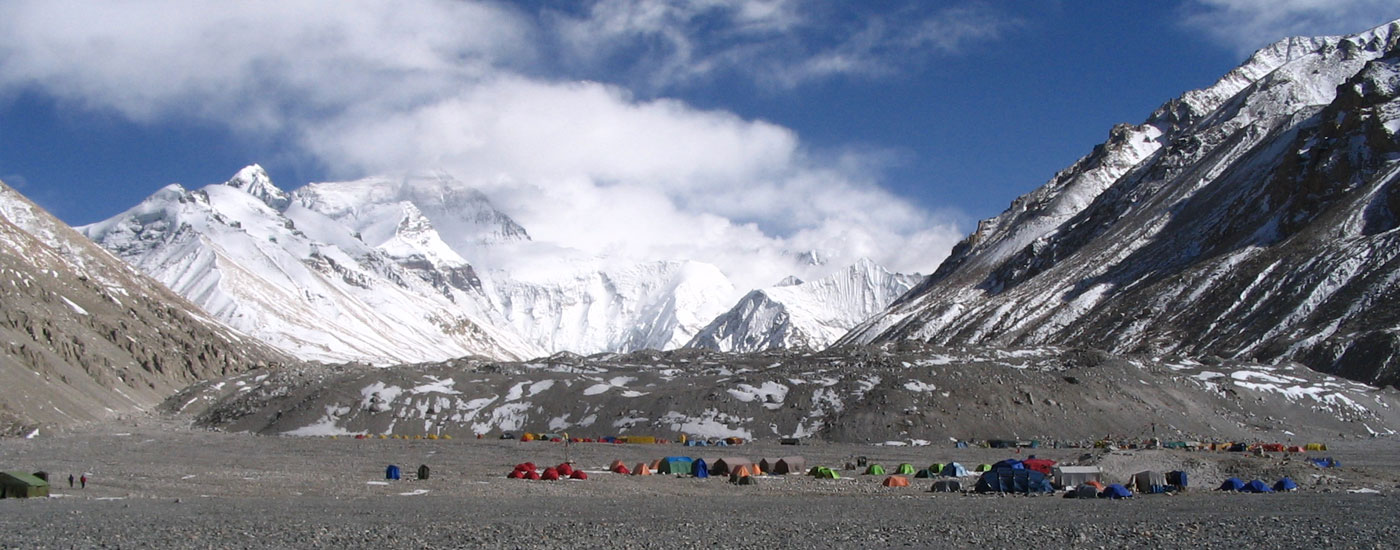
 The Everest base camp (5200m.) is a dream destination for tourists and Kailash Yatris around the world. Base camps at the base of the world's tallest peak provide breathtaking views of snow-covered Himalayan peaks and an insight into Tibetan Sherpa culture. Every year, thousands of tourists from around the world travel to the Everest Base Camp despite the unpredictable weather, tough terrain, and slippery snow-covered paths.
They take back lifetime memories that will last a lifetime. During April and May of every year, the Northern base camp on the Tibet side is usually filled with tents of Everest climbers. Below Everest base camp is Rongbuk Monastery and settlement with lodge and hotels. There is quite a bit of popularity at the northern base camp compared to the southern base camp. This heavenly place is the subject of Kailash tour packages organized by Monterosa Treks and Expeditions every year. Whether you wish to enjoy our best services on the trip or join us, we are always glad to have you.
07 July 2027 Day 01: Arrival in Kathmandu before 1:00pm and
transfer to hotel, check in, 3:00 PM briefing, evening Aarti Pooja
08 July 2027 Day 02: Holy sightseeing Kailash Nath Saga and
Doleshwor Mahadev, Lunch and after Boudhanath, Guhyeshori
09 July 2027 Day 03: Rudra Bhishek & visiting in Jal Narayan
10 July 2027 Day 04: Start, drive to Dhulikhel & overnight stay
11 July 2027 Day 05: Cross Nepal Tibet boarder and Nyalam
12 June 2027 Day 06: Drive to Saga Bazaar, overnight in Saga
13 July 2027 Day 07: Drive New Dongba 160km. /Saga 255km
14 July 2027 Day 08: Drive New Dongba / Prayang to Darchen
15 July 2027 Day 09: acclimatization / Additional visit Astapada
Drive to Astapad, explore South face of Kailash & Nandi Parvat
16 July 2027 Day 10: Drive to Yam Dwar & walking to Dirapuk
17 July 2027 Day 11: Walking to Zuthulpuk Kailash kora 2th day
18 July 2027 Day 12: Drive to Darchen & drive to Manasarovar
Full moon night in Manasarovar Lake
19 July 2027 Day 13: Drive to Saga Bazaar and overnight Halt
20 July 2027 Day 14: Drive to Nyalam Bazaar & overnight Halt
21 July 2027 Day 15: Drive Nepal-Tibet boarder, continue drive
22 July 2027 Day 16: Transfer Kathmandu airport for departure
07 July 2027 (Wednesday) Day 01: You will be welcomed and escorted to the hotel by our staff when you arrive at Tribhuvan International Airport in Kathmandu. After you arrive in Kathmandu before 9:00 am, we collect your passport and process your Tibet visa application. The Kailash Manasarovar briefing will begin after lunch at 3:00 PM. Everyone should attend the briefing. We will be providing Diamox medicine, a duffel bag and a small day bag and some more severer. The evening at 5:00 PM, we will meet in Hotel Lovey for Aarati Darshan in Pashupatinath as well as Ganga Aarati with holy dance and Shiva mantra chanting in front of Pashupatinath temple. As we get back to the hotel, we eat a vegetarian buffet dinner and take a break for the night.
08 July 2027 (Thursday) Day 02: At around 8:00 am, we begin our holy sightseeing tour in the Kathmandu valley with a guide. Saga Nepal, a Shiva temple that is among the tallest in Nepal is Kailashnath Mahadev Statue. This is the second tallest Hindu deity in the World after the Garuda Wisnu Kencana Statue in Bali, Indonesia. A total of 144 feet / 44 meters high, the statue was made of copper, zinc, cement, and steel. The Kailashnath Shiva statue is located about 20 km far from Kathmandu. After Kailashnath visit, drive to Doleshwor Mahadev temple.
Visit Doleshwor for Shiva devotees, a trip to Kailash is incomplete without a visit to the temples of Doleshwor Mahadev and Pashupatinath. Doleshwor Mahadev became the head of Kedarnath, one of the Char Dham Yatra, on Aug. 22, 2009 After the devastating flood of 2013, which destroyed Kedarnath Temple in Uttarkhand, Doleshwor Temple continued to offer regular prayers. In the Kedarnath Temple, the head priest requested that regular prayers be held in the Doleshwor Mahadev Temple. After Darshan of Doleshwor Mahadev, return to the hotel and while rest. Rest for a while, then drive to Boudhanath for a Darshan and visiting.
Buddhist Temple Buddhanath: It is named after the enormous stupa at the center of the shrine that attracts Tibetan pilgrims. Devotees stroll around the painted Buddha eyes adorning the gleaming white dome during prayers and seminars Boudhanath stupa in Kathmandu. It is located about 10 km from Kathmandu's center on the northeastern outskirts and has the largest spherical stupa in Nepal. Among the world's largest stupas, the Buddha Stupa dominates the skyline. Kathmandu Valley gained its glory from this point. Those are the nine carnations of Vishnu that we are displaying in Boudhanath. A world heritage site, the site has been designated by UNESCO.
Watch Kailash Tour Video 09 July 2027 (Friday) Day 03: Kailash pilgrims are taken to Pashupatinath temple early in the morning for Rudrabhishek, Hawan and Aarati. Eleven Brahmin priests prepare for fire offering Hawan in the Pavilion (Mandap) and perform Sankalpa Pooja in the beginning. Swastibachan (Preaching), Nyas, Rudra preaching, and Mahamritunjaya (Death victory) Pooja follow. The word 'Rudra', which means 'Fearful Lord Shiva' comes from Rudrabhishek, Rudranti Iti Rudri, and Rudhiryoge Metal. Among people on this planet, there is pain, violence, greed, and we sing religious hymns in praise of God Shiva to escape these miseries of life and to grant justice, good health, prosperity, peace, and salvation.
For this reason, Rudri is done to ensure peace in the world. Pilgrims begin their Kailash tour by visiting Pashupatinath and worshipping there. Devotees are believed to obtain all kinds of good merits by worshipping Lord Pashupatinath and performing Aarati. As a result, Kailash tours are believed to be complete only after a holy visit to Pashupatinath in Kathmandu. There is no doubt that Kailash Manasarovar is one of the most sacred pilgrimage sites in the World. Even more than 12 Jyothirlinga and Shiva Temples, Kailash is a sacred pilgrimage. The soul is superior to the human, the sages are superior to the human, the gods are superior to the gods and Lord Shiva is superior even to the gods and Kailash is his dwelling place. As a result, every pilgrimage is incomplete without the Kailash Pilgrimage.
A popular religious practice is to perform Rudra (Shiva's idol) Consecration and fire offering (Hawan) to Lord Pashupatinath to wish for a successful Kailash tour. The Panchamrit Pooja is held every day in Pashupatinath temple from 9:30 AM to 11 AM by Bhatta Pujari after Rudrabhishek. It is a payable Pooja and comes with a Pooja Thali, milk, Rudrashe mala, flower garland and a lamp. Performing Panchamrit Pooja for Lord Pashupatinath fulfills all the desired wishes for the Kailash Manasarovar Yatra. The ceremony concludes with the distribution of Prasad and Rudrashe mala. Only Hindu devotees can perform this Pooja. Religions other than Christianity are not allowed to enter the main gates. All of these rituals are included in the Kailash Manasarovar package.
Jal Narayan (Budhanilkantha): In the afternoon around 2:30 PM, begin sightseeing with a holy guide at the Budhanilkantha (Jal Narayan) Vishnu Temple, an open-air Hindu temple located in Budhanilkantha, Nepal. There is a large reclining statue of Lord Vishnu in front of Budhanilkantha Temple, which is located below the Shivapuri Hill at the northern end of the Kathmandu valley.
Budhanilkantha depicts Vishnu sleeping on a snake bed in the middle of the cosmic ocean depicted by a big pool of water. Budhanilkantha means "blue throat disguised by mud" and has nothing to do with Buddha. The peculiar name refers to two legends attached to the statue, one of them claiming that a farmer found the long lost statue in the mud when working his field with a plough and the other claiming that Vishnu sacrificed himself by drinking the poison of the cosmic ocean, which turned his throat blue. Back to hotel.
Watch Kailash Tour Video 10 July 2027 (Saturday) Day 04: The Kailash Manasarovar Yatra begins as we travel 29 kilometers from Kathmandu to Dhulikhel. After passing through Bhaktapur, Saga, and Banepa, you reach Dhulikhel. Dhulikhel is a picturesque hilltop town in the Kavrepalanchok District of Bagmati Province, 29 kilometers south of Kathmandu. The Himalayan Parvat Mala can be seen from here if it is clear weather, and we will stay here over night.
11 July 2027 (Sunday) Day 05: Dhulikhel to Friendship bridge: It takes approximately 4 hours to drive there by deluxe bus or tourist minibus. As the northern end of the Araniko Highway connecting Kodari and Zhangmu, Kodari is a major border town and trading post on the Nepal-China border.
Kodari's northern end is crossed by the Sino Nepal Friendship Bridge, which crosses the Bhote Koshi river. Located on the Chinese side, the bridge connects Nepal with Zhangmu, where the road joins the China National Highway. Located 35 kilometers (22 miles) from Zhangmu, Nyalam is a high-altitude border town and county seat of Shigatse Prefecture of the Tibet Autonomous Region, China. This high-altitude border town and county seat in Tibet's Shigatse Prefecture, China, sits at 3,750 meters (12,300 feet) above sea level and is near the Nepali border.
12 July 2027 (Monday) Day 06: Nyalam to Saga: In Tibet, the distance between Nyalam to Saga is approximately 250 kilometers (155 miles). Including the Lalung La Pass and passing near Peiku Tso Lake, this route passes through high-altitude terrain. Driving from Nyalam to Saga offers high-altitude desert landscapes, sparkling alpine lakes, and panoramic views of the Himalayas. The terrain changes from the greener border mountains near Nyalam to vast, dry plateaus and arid valleys typical of western Tibet as you ascend. There is nothing more stunning than a turquoise lake that sits high above the giant peaks around it and is reflected in the clear blue sky above. You cross or travel alongside the wide, beautiful upper streams of the Brahmaputra River (Yarlung Tsangpo) near Saga.
13 July 2027 (Tuesday) Day 07: The drive from Saga to New Dongba takes approximately three hours by Tibetan / Chinese tourist buses. The ride from New Dongba to Prayang is 95 kilometers along the G219 National Highway and takes another two hours. The road from New Dong to Prayang, which traverses high-altitude plains and the scenic Mayumla Pass region, normally takes about two hours. We will stay in either New Dongba or Prayang depending on hotel availability. The route from Saga to New Dongba and Prayang crosses through the stark Tibetan plateau.
The Trans-Himalayan region offers a deep spiritual atmosphere, yak-herder camps, ancient chortens, and vibrant prayer flags. The Brahmaputra River and Mount Shishapangma are sacred geographical and spiritual landmarks along Tibetan and Himalayan pilgrimages. Approximately 255 kilometers separate Saga from New Dongba or Prayang, the distance covered by road is about 5 to 6 hours. The route generally traverses high, arid, and scenic Tibetan plains on well-paved, high-altitude highways, other than a few bumpy or unpaved sections near towns or during seasonal melts.
14 July 2027 (Wednesday) Day 08: The distance between New Dongba to Darchen is about 390km, and the distance between Prayang to Darchen is about 255km. far. There are 7 to 8 hours of travel time between Dongba to Darchen, and 6 to 7 hours of travel time between Prayang to Darchen as time wise. You will see the Tibetan plateau in the distance as you drive through small towns. The scenic journey along National Highway G219 takes you through dramatic landscapes and spiritual landmarks. There are beautiful views of the arid Tibetan landscape, the high-altitude plains, and distant peaks of the Himalayas.
Around 5,200 meters above sea level, the Mayum La Pass offers spectacular views of the surrounding mountains and valleys, including Mount Shishapangma and Brahmaputra River. You will see Mount Kailash and Manasarovar Lake for the first time as you approach Darchen. Lake Mansarovar, one of the world's highest freshwater lakes and a turquoise-colored lake of spiritual significance, is a popular stopping point for pilgrims. We stayed two nights in Darchen for acclimatization after the drive, and it serves as a base camp for the Mount Kailash Kora (circumambulation).
15 July 2027 (Thursday) Day 09: Acclimatization, Rest, day hiking or Addition Yatra to Astapad paying extra and visit to Astapada. Drive to Serlung Gompa and walk for about 10 minutes to ASTAPADA and holy explore, have a Darshan of lord Kailashnath of South Face and Nandi Parvat. There is a Tibetan Buddhist monastery called Serlung Gompa, which is located on the hill and this hill is called ASTAPAD it is revered by both Jains and Buddhists as a sacred site. "The mountain hill of the eight steps" is also known as Astpada.
The nearby sacred site of Astpada is located at the foot of South face of Mount Kailash, in a mountain amphitheater. According to Jain mythology, Astpada is the place where the first Jain Tirthankara attained nirvana. You can see the Mount Kailash's south face as well as Nandi Parvat from Astpada, a mountain amphitheater at the base of Mount Kailash. Additionally, Nandi Parvat, which lies near Mount Kailash, is visible from Astpada. Astpada is located about 5 kilometers away from Darchen.
16 July 2027 (Friday) Day 10: From Darchen, drive to Yam Dwar.) Yam Dwar is the Gate of Death. Yam Dwar is the starting point for your walk around Mount Kailash. For those who are unable to walk, a pony and local porter can be hired for 4 days but you must inform us while at Manasarovar, so the Tibetan Guide can arrange it. After walking from Yam Dwar for approximately 5 or 6 hours, you will reach Dirapuk. The north face of Mont Kailash is much closer from Dirapuk. There seems to be Lord Shiva himself staying there.
Mount Kailash, located at 6714 meters above sea level, Kailash Parbat is a sacred religious place. Traditionally, this region has been considered the purest of all religious places. It is thought to be the center of the World and the origin of all religions before Hinduism, Jainism, and Buddhism. There are many references to Kailash Parbat in the holy books such as the Ramayana and Mahabharata. Asia's civilization is incomplete without the description of Kailash Parbat according to ancient Asian stories. In Tibet, Kailash Parbat can be found. There is a lack of satisfactory scientific research in this region. From the Brahmaputra in the east to the Karakoram in the west, this religious Parbat stretches for miles.
Even though they explained Kailash differently, different religious groups, such as the Shaiba, Hindus, Buddhists, Jains, and Bon-Po, respect it equally. Buddhist and Shaiba traditional literature describes Kailash as the World's center which is part of Sumeru. Hindus believe it to be the residence of Lord Shiva and his wife Parvati. Kang Rimpoche is the name by which it is revered by Buddhists. As great natural Mandalas, Kailash and Manasarovar are regarded by Buddhists. For them, the Mandala is a symbol of respect and salvation. There is an isolated peak on this mountain that is worshipped by Jains as Aspada. This is the same place where Rishavadev, the founder of this religion, received spiritual salvation. Various logics can be used to claim this Parbat as sacred.
The isolated Parbat serves as a source for rivers such as the Brahmaputra, Satlaj, Indus and Karnali. Pilgrims should walk 38 km around Mount Kailash within three days, and if they add Charan Sparsh, it will take four days. People who move around the Kailash Parbat will be free of all their sins throughout their lifetimes, according to Hindu mythology. After moving around the Parbat 108 times, they will reach Nirvana. According to legend, a person who moves Nandi once receives the equivalent return of 13 rounds around Mount Kailash. There is a belief that Kailash Parvat is the form of Lord Shiva, and that the holy river Ganges flows from the snowy tip of the mountain.
From this Monastery, you can see Mount Kailash in a more beautiful manner. When viewed from Dirapuk, Mount Kailash appears between Mount Manjushree on the right and Mount Bajrapani on the left. Originally from Mount Kailash, the Ganges River meets the Lachhu River and merges with Rakshas Lake and follow out Karnali River. From Rakshas Lake's junction, the Karnali River emerges. The water from Rakshas Lake escapes through the Karnali River, but the water from Manasarovar is stored in the form of Lake Manasarovar
Charan Sparsh / Touch Kailash is closed from August 2024: Pilgrims walk for four hours (4kms) to touch the feet of Mount Kailash, known as Charan Sparsh. Touching the base of Kailash Mountain feels like a blessing from Lord Shiva. Pooja is performed by some pilgrims in order to seek the blessings of Lord Shiva. Getting back to Dirapuk takes approximately one and a half to two hours and it is a day tour / Yatra.
"Charan" means "foot" and "Sparsh" means "to touch". Together, these words mean "to touch one's feet". Touching Kailash Parbat's feet is a tradition that dates back thousands of years. "Charan Sparsh" has a scientific basis, as the human body releases vibrations touching the feet, which encourage the flow of energy and blessings, happiness and success. As a result of this exchange of energy, one gains vigor, self-confidence, and contentment. It is like receiving invisible blessings after "Charan Sparsh"
Watch Kailash Tour Video 17 July 2027 (Saturday) Day 11: A walking tour from Dirapuk to Zuthulpuk (4790 meters - 22 kilometers). As we have to pass Dolma La Pass, which is 5636 meters above sea level, today is an important day. With an imminent snowstorm, the weather is unpredictable, so we should start our journey early morning. After passing the pass, we descend steeply to Shapje Datok and then flat to Zuthulpuk monastery. We will stay in mud houses or guest houses for the night.
Ganesh Kund (Sarovar): On the right hand side of the walking trail, about 45 minutes before reaching Dolma La Pass 5636m., (Kailash circuit), there is a holy Ganesh Kund. The walking trail is 15 minutes away. This Kund resembles Lord Ganesh's bathing place.
The Legend of Gaauri Kund: According to Hindu mythology, the legend of Shiva Purana mentions Gauri Kund as part of Sanatana Dharma. It is said that Gauri Sarovar is for Kailash Yatri's purification and compassion, that it purifies mind, body and speech. As a result, almost all Yatri of Kailash Manasarovar tours also include a tour program. As part of the holy bath offered to Goddess Parvati Mata, the goddess had molded a picture of her son Ganesh from a cleaning solution frothing on her body and resurrected it. In her holy deep, she placed Ganesh at the path to prevent strangers from entering. At the same time, Lord Shiva came to his residence Mount Kailash but Ganesh jee did not recognize him. When Lord Shiva became angry and cut off the child's head, Mata Parvati became desperate and asked Lord Shiva to restore life to the child. As a result, Parvati had her son back. Kailash tour Yatri is fascinated by this real story.
The meaning or Significace to visit Gauri Kund: By splashing the Jaal on their heads, Kailash Yatri purify their minds, bodies, and speech during their Parikrama or Kora. For their ancestors to have peace in heaven, they offer TARPANA and Jaal (holy water). Their homes are filled with holy water brought from the Kund.
Where is the Gauri Kund Located? On the Kailash Manasarovar Yatra tour, after descending steeply from Dolma La Pass, the highest pass, the round turquoise colored Gauri Kund is situated at 5608 m., above sea level, but it has no trail, so you have to walk on massif rock.
18 July 2027 (Sunday) Day 12: Walking from Zuthulpuk to Chongdo (Zong Dho) and then driving to Darchen and continue drive to Manasarovar Lake for full moon night. Sarovar literally means 'lake of consciousness' and Manas simply means 'brain'. Maan Sarovar is therefore regarded as a place for storing 'consciousness' and 'knowledge' In addition to its name, it is also known as the lake created by Lord Varma. In Hinduism and Buddhism, Manasarovar Lake has a deep religious and spiritual significance.
The lake has been closed to empty and deep bathing since 2018, but pilgrims can wash their hands in it as well as Sparsh. Water from Manasarovar lake is brought by our company's workers inside the tents, where it is heated by cooking and mixed with cold water for bathing. Everybody can do bathing Separately tent Male and Female. After bathing each Yatri, a Nepali Brahman performs Rudrabhishek, Havan, and Aarti with Pushpanajali. Also, every pilgrim or family traveling to Kailash Manasarovar is offered Rudrabhishek, Havan, Aarti and Pushpanajali on the full moon evening day or the next day May to September every year.
In order to be relieved of their sins, some are meditating and others are reciting the names of their ancestral gods, performing the Hawan (offering grains mixed with butter to Pooja and Aarati (butter lamps) are completed and they exchange happiness. The fire) in their names. Full Moon Night in Manasarovar Lake.
19 July 2027 (Monday) Day 13: After visiting the Manasarovar Lake, drive to Saga bazaar. Stay here overnight.
20 July 2027 (Tuesday) Day 14: Morning take breakfast and drive to old Tingri & Rongbuk and Everest Base cam 5200m. from sea level. one the way you can see PekhuTso Lake, a beautiful highland Lakes well as Salt Lake (Nunilo Tal). Reach in Everest Base camp explore 2 hours and back to Rongbok Guest House.
21 July 2027 (Friday) Day 15: Leaving North Face Everest Base Camp (near Rongbuk Monastery) in the morning, drive to Nyalam through Basong, also called Pasum and old Tingri. There are approximately 219 kilometers (136 miles) between North Face EBC and Nyalam Bazaar Tibet. View from the Rongbuk Monastery area and base camp of the giant black pyramid and snow-covered north face. The route from North Everest Base Camp to Nyalam offers views of Mount Everest's massive North Face, high Himalayan peaks, and sweeping high-altitude Tibetan landscapes. The landscape changes from wide, dry desert plains into lush, green waterfalls and valleys as you descend in elevation towards Nyalam. Overnight stay in Nyalam Bazaar.
22 July 2027 (Saturday) Day 16: In the journey from Nyalam to Zhangmu and onward to the Kodari border, you experience a dramatic and rapid change from the stark, high-altitude landscapes of Tibetan Tibet to lush, subtropical Himalayan river valleys. There are nearly 1,500 meters of drop over a winding 30-kilometer stretch of hairpin turns as you leave Nyalam (3,750 meters) for Zhangmu (2,300 meters). You will find narrow mountain roads carved into towering cliff faces with deep, plunging river gorges below. Taking the Araniko highway from Kodari through Barhabise (Brahbishe), Dolalghat, and Dhulikhel to Kathmandu offers a dramatic transition from rugged high-mountain gorges to peaceful agricultural valleys and urban views.
The drive begins near the Tibet border with views of the roaring, fast-flowing turquoise Bhote Koshi River cutting deep through steep canyons. The steep gorges gradually open up into wider river corridors as you descend past Barhabise, where adventure sports sites such as canyon jumping and rafting are situated in the valley. You can see the scenic confluence of the Indrawati River and the Sun Koshi River near Dolalghat. The road climbs gently out of the river basin through farming settlements. In Dhulikhel, traditional Newari brick architecture and ancient temples are complemented by sweeping views of the high Himalayas (including Langtang and Ganesh Himal). A final stretch passes Banepa and Sanga (where a huge statue of Lord Shiva stands) before entering Kathmandu Valley's bustling bowl.
23 July 2027 (Sunday) Day 17: You will be taken to Airport from hotel for final departure.
Per Person USD 3500 (Double / Twin Sharing basis)
Per Person USD 4000 (Single Room
Extra cost if required for Kailash Circuit:
Horse ride during the Parikrama 1 horse for 3 days USD 400
(Directly payable to the Tibetan guide)
Porter for carrying small bag for 3 days round Kailash USD 200
Om Namo Shivaya ! Jaya Bhole Nath !! Har Har Mahadev!!!
What our client's says about Kailash yatra and tour operator





monterosa-nepal.com nepalexpedition.com
© kailashtourpackage.com - 2026
Online Payment 
Terms & Conditions
Site Design By: Webdesigninnepal.com