
Get Social 


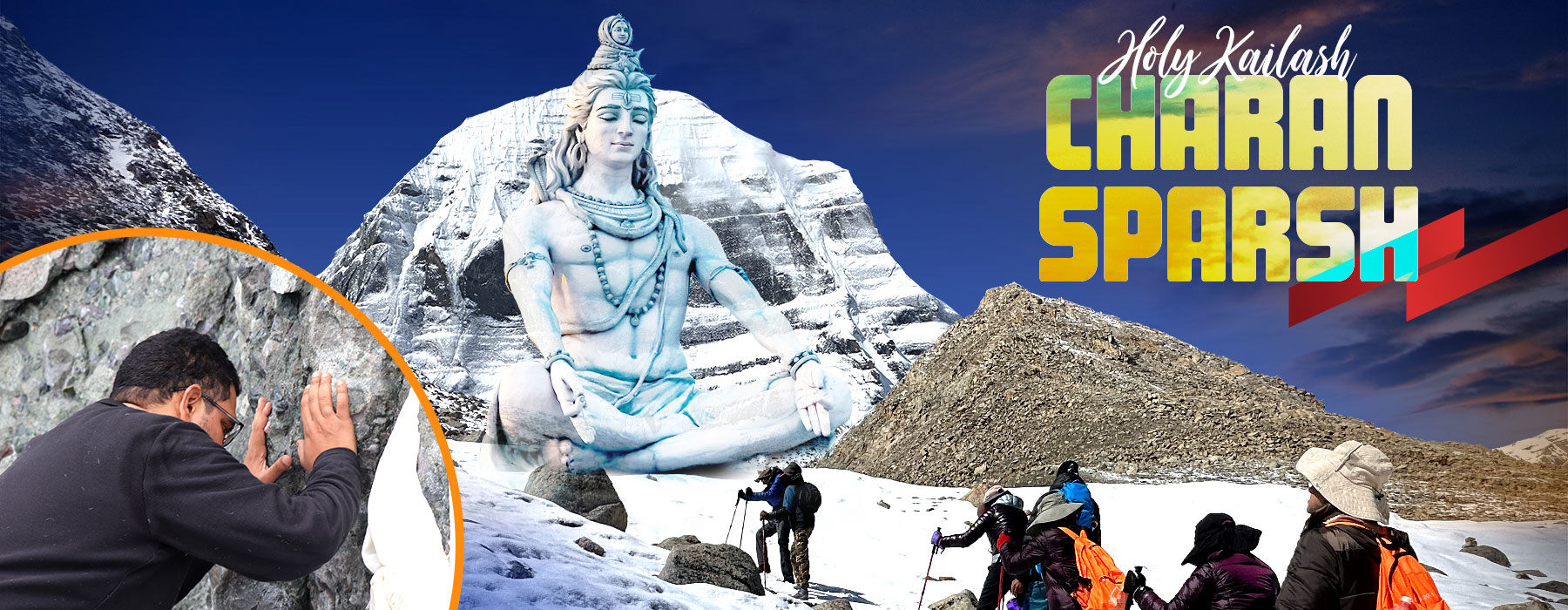
Mount Kailash Yatra, Everest Base Camp (EBC) and Lhasa Yatra are demanding and challenging journeys, rather than easy ones. You will travel by vehicle for most of the trip; however, you will encounter extreme altitudes at 5,200 meters (17,000 feet) at Everest Base Camp and strenuous trekking during the Kailash Kora and Pradakshina circles. At a height of 5636m (18,500ft.) above sea level, Dolma La is the highest pass in the world.
The world's highest plateau is surrounded by the Himalaya range in the south, the Karakoram Range in the west, and the Kunlun Mountain in the north. Due to its climate, height, and land structure, Tibet is considered a unique land There are many high mountains in it, and it is also the source of many rivers, including the Brahmaputra, Indus, Karnali, Sutlej, etc. The Hindu pilgrimage to Mount Kailash and Manasarovar Lake take place every year, attracting thousands of pilgrims from across the globe. Because Nepal's route is the shortest & easiest, most pilgrims travel to China's autonomous region Tibet by way of Nepal.
 Watch Kailash Tour Video
 Sacred sites Kailash Manasarovar: Hindus Buddhists, Jains, Shikhas & Bonpo as well as Lake Manasarovar consider it sacred.
As Physical Moderate Challenge: As moderately challenging journey, a Yatra requires traveling companions to be physically, mentally, and spiritually strong. Kailash's Kora stretches 53km (33 miles) on foot or by pony, while surfaced roads cover 15km.
Eligibility: There are a few requirements for pilgrims: they must be in good health, have a valid passport for at least seven months, be at least nine years old, and not be older than 79 years old. (Must be non-Indian passport holder)
Best time to visit: The best time to hold yatras is from May to September for Kailash Manasarovar but including Everest Base camp north side from Tibet is May, June and September be best time to visit, when the temperatures are mild and not too cold, making them more comfortable and safer.
Accommodations: 5-star hotel in Lhasa Tibet (Xizang) Shigatse, the 5-star hotel Gegar and the 4-star hotel Saga and Darchen are currently available, while at Manasarovar Lake and circle in Kailash, the Dirapuk and Zuthulpuk Dormitory room and the basic Guest house are available.
Meal Plan: For Kailash tour 2027: We will be served vegetarian breakfast, lunch and dinner at our hotels in Kathmandu. The hotels in Lhasa and Shigatse Tibet will only serve us bed and breakfast. There will be a Nepali restaurant buffet for lunch and dinner out of hotel in Lhasa and Shigatse, or an Alakat Nepali and Indian meal plan in menu. The Nepali Chef and his team will prepare breakfast, lunch, and dinner as well as snacks, tea, and coffee starting from Saga and onward.
Dates, Seasons 2027: During Kailash Manasarovar's season, it is always May to September. May, June, and September are the best months for weather, whereas July Guru Purnima and August are Srawan Massa, Janai Purnima, and Rekha Bandhan are the best times for Hindu rituals. We publish guaranteed departure dates and prices. If the dates don't correspond to your travel plans, we can schedule your desired date, but we require a minimum of 25 participants, and if there are fewer than 25, you will have to participate in one of our fixed departures. It is fixed that Manasarovar Lake will be the point of departure for the full moon night of 2027.
MBBS Doctor and Braman Pandit: Monterosa Treks and Expeditions provides medical physicians Doctor with necessary medicine as part of the trip. We will also carry oxygen tanks and mask regulators on our Kailash Manasarovar tour. In case anyone needs it, an oxygen tank and mask regulator are located on the bus's surface. As part of our Kailash Manasarovar tours, we also provide massage therapy for USD1 per minute. Rudrabhishek, Hawan, Arati is performed by a Braman Pandit with seven or eleven priests at the Pashupatinath temple, and Rudrabhishek, Hawan, Arati at Manasarovar Lake is performed by one Braman Pandit. Yatri has Dakshina money for Pandits at the center of their hearts after this Hindu ritual is completed.
Once you arrive at Tibet's Gonggar airport, our guide will meet you outside of the immigration counter to assist you with immigration procedures. The Tibetan Khata (white garland) is a welcome for all. Everyone boards a bus or minibus at the airport and is driven to Lhasa. The journey takes about an hour and involves 62.5 km. In the evening, we will check in at the hotel and then head out for dinner. We at Monterosa Treks and Expedition (P) Ltd organize an impeccably smooth and well-organized Kailash Yatra every year. Please contact us for more information.
We are one of Nepal's leading Operator for adventure tours and Kailash Manasarovar Yatra in Nepal and we believe in teamwork as the best means for making our clients satisfied with our wonderful hospitality. A team leader, guides, chefs, and support staff take you to the Holy Kailash Mansarovar Yatra with love and care. They also handle logistics, safety, and make sure that your pilgrimage runs smoothly. Monterosa Treks and Expedition provide medical doctors with medicine and massage therapists to ensure comfort and safety.
Meeting Point: On the day of your arrival, we will pick you up from Gonggar airport Xizang Tibet according to your flight schedule.
11 May 2027 Day 01: Arrival Gonggar airport and drive Lhasa
12 May 2027 Day 02: Sights in Lhasa including Potala Palace
13 May 2027 Day 03: Drive Lhasa to Shigatse 3782m.- Hotel
14 May 2027 Day 04: Drive Shigatse to Basong, way to EBC
15 May 2027 Day 05: Drive Basong to Everest BC and Saga
16 May 2027 Day 06: Drive to New Dongba or Prayang town
17 May 2027 Day 07: Drive to Hor, Braga, Darchen overnight
18 May 2027 Day 08: Drive Yam Dwar & start walk to Dirapuk
19 May 2027 Day 09: Trek to Dolma La 5636m and Zuthulpuk
20 May 2027 Day 10: Walking to Chongdo, drive Manasarovar
Start Hindu rituals including Rudrabhishek, Hawan and Aarati
Full moon night in Manasarovar Lake
21 May 2027 Day 11: Drive from Mansarovar to Saga Bazaar
22 May 2027 Day 12: Drive to Shigatse valley & overnight stay
23 May 2027 Day 13: Drive to Lhasa town and stay overnight
24 May 2027 Day 14: Drive Gonggar airport, fly China & home
11 May 2027 (Tuesday) Day 01: All Yatri or tourists arrival Lhasa Xizang Tibet and who complete Tibetan immigration formalities will be greeted by our guide outside the immigration counter. Tibetan Khata (white garland), Welcome for all with Tibetan Khata (white garland). Everyone is transported by minibus or bus from the airport to Lhasa city. The journey is 62:50 km and takes about an hour. We enjoy seeing the naked hills, settlements at the bottom of the hills, and agricultural land full of crops on the way. A vegetarian buffet dinner is served hotel in evening, followed by an overnight halt in Lhasa.
Tibet's capital and largest city, Lhasa, has wide roads and sky kissing buildings that make it as attractive as any developed country, and the Dalai Lama's palace is also a must-see. Other attractions in Lhasa include the Potala Palace, Jokhang Monastery at Bharkhor Bazaar, Bharkhor Bazaar itself. The altitude of Lhasa City is 3,600 meters above sea level. Check in to hotel in Lhasa, rest and acclimatize today.
12 May 2027 (Wednesday) Day 02: Breakfast is taken in the hotel in the morning and after breakfast, a local guide takes you on a local sightseeing tour of Lhasa. At a height of 150 meters, the Potala Palace is located in the central part of Lhasa city. A meditative office building and an administrative office building are adjacent to the palace. A red palace symbolizes meditation, while a white palace represents transparent administration. In Tibetan, 'Lhasa' means 'The Land of Gods and Goddesses'. There are different varieties of magical Buddha idols in the Red Palace, while in The White Palace, there are meditation rooms, living rooms, and meeting rooms for foreign guests of the Dalai Lama. Lhasa city is a valley which is also adjacent to two sacred rivers namely, Lhasa and Brahmaputra. According to Buddhists, it is believed that one can obtain ‘Nirvana’ meaning ultimate salvation by having divine view (Darshan) of Potala Palace and Jokhang Monastery at least once in one's lifetime.
The Potala Palace: The palace was built in the 7th century by Songtsan Gampo, and it was expanded by the 5th Dalai Lama to its present size. At this time, it also succeeds in becoming the residing, the main political and religious palace of the Dalai Lama. In addition to living quarters, temples, tomb stupas and monk dormitories, the main palace was divided into two sections: the white palace and the red palace. It is 115.703 meters high with thirteen stories. This palace contains countless cultural relics, including murals, sutras, and images, all of which are valuable. Besides being classified as national treasures, these Tibetan arts and culture are also listed as one of the most important cultural relics to be protected by the state council. In addition to 13th Dalai Lama's entombment, 6th Dalai Lama's entombment remains mysterious and unknown.
According to experts, the ashes of the 1st, 2nd, 3rd, and 4th Dalai Lama were kept safely at Jokhang Monastery after the funeral rites. In the Potala Palace, there are a thousand rooms, out of which 27 are open to the public, such as the Bed Room, Living Room, Study Room, Meeting Room and the Entombment Place of Dalai Lama, the current 14th Dalai Lama, who lives in India since 1959.
13 May 2027 (Thursday) Day 03: Having spent two nights in Tibet's capital city, Lhasa, our journey to Kailash Manasarovar begins by traveling in our tourist coach. One hour drive from Lhasa takes us to the Brahmaputra River and through its banks, we reach Shigatse, the second largest city in Tibet. It has fine luxury hotels for lodging and we have arranged a Nepali restaurant for our pilgrims to eat in. This is a huge monastery known as Tashilimphu Monastery. The distance from Lhasa to Shigatse is 271 kilometers and it takes 5 hours to drive there.
14 May 2027 (Friday) Day 04: We will serve a buffet breakfast in the morning, followed by a drive to Basong (also known as Pasum) via Lhatse. During the journey today, we cross one high pass that provides a spectacular view of Tibet's countryside. The distance between Shigatse and Lhatse is 160 kilometers. On our way from Lhatse to Basong (also known as Pasum), which is 190km away from Lhatse, we stop for lunch on the way. From Lhatse toward Basong (Pasum) way to Everest Base Camp North face, you pass through dramatic high-altitude valleys and mountain passes offering spectacular views of Mount Everest. A sweeping panorama can be enjoyed from the Gawu La Pass (5,198m), located near Basong and the entrance to Mount Everest.
Depending on the weather, you may be able to see five of the world's highest peaks above 8,000 meters, including Mount Everest 8848m, Lhotse 8516m, Makalu8485m, Cho Oyu8201m and Shishapangma 8027m. At 4,300 meters (14,100 feet), Basong, a traditional Tibetan village, is located on Mount Everest's Tibetan side. The North Everest Base Camp (EBC) is about 30 kilometers (a 40-minute drive) from this location, which offers excellent views of the north face of Everest. The Tibetan Autonomous Region of China has a few noteworthy rural areas and alpine lakes called Basong or Pasum. A remote Tibetan settlement on Mount Everest's Tibet side is usually referred to by this term, as is the stunning Basum Lake region.
Everest Base Camp: Visiting Everest Base Camp's north face offers direct unobstructed views of the mountain's north face and a more remote feel compared to its south side, offering cultural and high-altitude experience in Tibet, China. Along the Friendship Highway, the journey often begins in Lhasa, passes through historic towns and monasteries like Rongbuk monastery (the highest monastery in the world) and culminates at the Base Camp, about 5,200 meters (16,900 feet) above sea level. As a result of the high altitude as well as not well-maintained hotels and lodges, we cannot sleep around Everest Base Camp.
Watch Kailash Tour Video15 May 2027 (Saturday) Day 05: We will drive to Everest Base Camp North Face in the early morning today. Mount Kailash is the culmination of a real Tibet journey that begins at Everest base camp. We leave the highway and begin our journey to the Rongbuk Valley, home of Everest Base Camp. A massive glacial valley frames Mount Everest's towering North Face as you descend toward Rongbuk Monastery and the Tibetan North Everest Base Camp. Pang La (5,120m) provides spectacular views of Mount Everest and the snowcapped Himalayas. To reach Rongbuk, the drive continues. There is a monastery dedicated to Guru Padmasambhava at an altitude of 5100 meters above sea level called Rongbuk Monastery. You can admire Mt. Everest's north face for half an hour by driving up to Everest Base Camp (5200 meters). The spectacular views of Mount Everest's north face from Everest Base Camp Tibet (North Face) have made it one of the most popular mountaineering destinations in the world. Visit old Tingri and Saga after exploring Everest base camp. A beautiful highland lake as well as Nunilo Tal (the salt lake) can be reached by driving through Khu Tso on the way to Saga. Before reaching Saga bazaar, we can see the Brahmaputra River and cross the bridge. As soon as you reach Saga, check into the hotel where Nepali staff members will welcome you all and serve you a meal.
Team Leader: Guide staff and food: Kailash Manasarovar Yatra or tour is taken from Kathmandu via Chengdu - Lhasa route or direct flight to Lhasa with Nepali team leaders and guide, who will only take Lhasa - Kailash - Lhasa directly from mainland China. Staff will be picked up from Lhasa airport for our Kailash Yatri. Each day, delicious pure vegetarian meals are provided in Lhasa city and Nepali restaurants in Shigatse. As we travel by road from Kathmandu, we meet all Nepali staff members in Saga, including the chef and the rest of the team. Kailash Manasarovar Yatri are provided with delicious pure vegetarian food for breakfast, lunch, and dinner from Saga onward.
16 May 2027 (Sunday) Day 06: A Tibetan / Chinese tourist bus will take you 160 km from Saga to New Dongba in approximately three hours' drive. Taking the G219 National Highway from New Dongba to Prayang takes 95 kilometers, and the bus ride takes another two hours. The journey from New Dong to Prayang City usually takes two hours because of the high altitude of the road and the Mayumla Pass. There are hotels in New Dongba and Prayang depending on availability.
The drive between Saga to New Dongba and Prayang crosses the stark Tibetan plateau. Trans-Himalayans are known for their ancient chortens, vibrant prayer flags, and deep spirituality. The Brahmaputra River is a sacred geographical and spiritual landmark on Tibetan and Himalayan pilgrimages. The journey takes about five to six hours between Saga to New Dongba and Prayang, which is approximately 255 kilometers away. Tibet's high, arid, and scenic plains are traversed by a well-paved high-altitude highway, but some sections are bumpy or unpaved, especially near towns or during melting season.
17 May 2027 (Monday) Day 07: Today drive New Dongba to Darchen are approximately 390 kilometers apart, and Prayang to Darchen are approximately 255 kilometers apart. The trip from Dongba to Darchen takes between seven to eight hours, and the trip from Prayang to Darchen takes between six to seven hours by tourist bus. Traveling along National Highway G219, you will pass through small towns and see dramatic scenery and spiritual landmarks. The view from this vantage point is breathtaking, providing a stunning view of the Tibetan plateau, the high-altitude plains, and the distant peaks of the Himalayas. The Mayum La Pass, located around 5,200 meters above sea level, offers breathtaking views of the surrounding mountains. There are pilgrims from all over the world who visit Lake Manasarovar because of its turquoise-colored, high-altitude lake. It is necessary to acclimatize before beginning the Mount Kailash Kora (circumambulation).
Mount Kailash: Kailash Parbat is located at 6714 meters above sea level, the height of the sacred religious place. Religious purity is supposed to be at its highest in this region. Prior to the origin of Hinduism, Jainism and Buddhism, it was supposed to be the center of the world. Ramayana and Mahabharata glorify Kailash Parbat. There is no civilization without a description of Kailash Parbat in ancient Asian stories. The Kailash Parbat is situated in Tibet. There is a lack of satisfactory scientific research in this region. It extends from Brahmaputra in the east to Karakoram in the west.
Although they explained Kailash differently, different religious groups like Shaiba, Hindus, Buddhists, Jains and Bon-Po respect it equally. According to traditional Buddhist and Shaiba literature, Kailash lies at the center of Sumeru, the world's center. Hindus believe it is the residence of Lord Shiva and his wife Parvati. In the name of Kang Rimpoche, Buddhists revere it. Kailash and Manasarovar are considered great natural Mandalas by Buddhists. For them the Mandala is a symbol of respect and salvation. For this isolated peak the Jains worship it as Astpada. In the same place Rishavadev, the founder of this religion, received spiritual salvation.
Various logics can be used to claim that this Parbat is sacred. From this isolated Parbat, big rivers like the Brahmaputra, the Satlaj, the Indus and the Karnali originate. There are 53 km around Mount Kailash, and pilgrims should walk 38 km within three days, or four days if they combine the Charan Sparsh (Touch Kailash) tour. In Hindu mythology, a person who moves around Kailash Parbat will be free of all sins committed during his or her lifetime. They get Nirvana if they move around the Parbat 108 times. The legend also says that moving Nandi once is equivalent to moving around Kailash 13 times.
The water flowing from Kailash Parvat's snowy tip is worshiped as Ganges, the holy river flowing from Lord Shiva's form. From the side of this monastery, one can see Mount Kailash more clearly. Mount Kailash can be seen between Mount Manjushree at right and Mount Bajrapani at left when viewed from Dirapuk. The Ganges River, which originates from Mount Kailash, meets the Lachhu River and mixes with Rakshas Lake. Rakshas Lake receives water from every river that flows from the Kailash Himalayan Ranges. It is called Karnali because it forms at the junction of Rakshas Lake and Rakshas Lake Junction. Rakshas Lake water escapes through the Karnali River but Manasarovar water is stored in Lake.
Watch Kailash Tour VideoYam Dwar in Kailash: In some cultures, Yam Dwar represents a spiritual gateway where worldly concerns become spiritual concerns. Pilgrims begin the sacred circumambulation of Mount Kailash at Yam Dwar, called the "Gateway of Death.". An important spiritual site, this mountain is a holy one. As a spiritual threshold on Mount Kailash that allows pilgrims to leave the mundane world and embark on a spiritual journey of purification and enlightenment, it serves as the beginning point for Parikrama (circumambulation) of the mountain.
18 May 2027 (Tuesday) Day 08: This is the first day of the Kailash Parikrama/Kora from Darchen to Yam Dwar & Dirapuk. Drive to Yam Dwar in the morning and walk to Dirapuk (12 kilometers/4890 meters). From Yam Dwar, we start our Kailash circumambulation [kora] circuit/round/parikrama. Due to the distance of only 6km, the blue bus takes 20 minutes to reach there. The place is also called Yam Dwar. At Yam Dwar, all the pilgrims are offering to Shiva after getting off the bus. After that, we walked around the Yam Dwar three times. The Gate of the God of Death (Yam Dwar) is known as this place in Hinduism. In the shape of a temple, Yam Dwar built it.
There are three bells inside, called Barma, Vishnu and Maheshwar. There are three circuits inside the door of this temple. The first day of Parikrama begins with belling and continuing to walk or ride a pony to Dirapuk. During the pilgrimage on foot, physically handicapped pilgrims pay homage to Kailash Parbat at a distance and return to Darchen because the visit to Yam Dwar is believed to provide equal religious gain as the visit to Kailash Parbat itself. Nepali workers, pilgrims, horses, porters, yaks, and porters are all on this path or trail.
We stopped for lunch after walking along the Lachhu riverside path for three hours. From here, Kailash Parbat can be clearly seen. We can see an elephant-shaped stone below the Parbat. It is believed that God Indra rides on it. We can reach Dirapuk after walking for two hours. Lha Chhu River has a Dirapuk Monastery situated on its banks. Its name is derived from the name of the monastery. It is located at a height of 4900m. above sea level. Seeing Kailash from here is like seeing heaven.
It is estimated that more than 500 pilgrims arrive at Dirapuk every day riding on horseback or walking from Yam Dwar. Some Yatri prefers to take a pony and a porter for the 4 days, (If you wish to take a pony and porter, please inform the Tibetan guide in advance). Today, I have to walk continuously for about five to six hours. All our goods and equipment, as well as your bags, will be carried by Yak. You can see the north face of Mt Kailash from Dirapuk mud house/guesthouse, where you can spend an overnight stay.
Charan Sparsh is closed for everybody from August 2024: After breakfast, pilgrims walk for 4 kilometers from Dirapuk to Mount Kailash, also called Charan Sparsh. It feels as if Lord Shiva has blessed you when you touch the base of Kailash Mountain. Pooja and prayers are offered to Lord Shiva by pilgrims. Dirapuk is a day trip that takes approximately one and a half hours to two hours.
"Charan" means "feet" and "Sparsh" means "touch". Touching one's feet is the meaning of both words together. The ancient tradition of touching Kailash Parbat's feet dates back thousands of years. Feet are vibrated by the human body, promoting the flow of energy and blessings, happiness and success. This exchange of energy creates vigor, self-confidence, and contentment. The inside of the body glows. After "Charan Sparsh," one receives an invisible amour. This amour provides motivation and strength. Dirapuk will be the destination for the second night
19 May 2027 (Wednesday) Day 09: Walking or horseback riding from Dirapuk to Zuthulpuk. We have to pass Dolma La Pass, which is 5636 meters above sea level today. The weather at Dolma La Pass can be unpredictable, and sometimes snowstorms may occur. Therefore, we should start our journey as early as possible in the morning. Our route passes Ganesh Kund and Gauri Kund lakes. After climbing down the pass, you will reach Shapje Datok and Zuthulpuk monastery. Approximately nine to ten hours are needed to complete the 22KM distance. A mud house in Zuthulpuk will be your home for the night.
Ganesh Kunda (Sarovar): It takes about 45 minutes to reach the 5636m. Dolma La pass. The holy Ganesh Kund is located on the right-hand side of the walking trail (Kailash circuit). The walking trail is 15 minutes away. There is a Kund in the shape of Lord Ganesh where he bathes.
The Legend of Gauri Kunda: The legend of Shiva Purana mentions a story about Gauri Kund or Parvati Kund, which is part of Hindu mythology. In the Puran, Gauri Sarovara is for purifying the mind, body, and speech of Kailash Yatri. Almost all Yatri of Kailash Manasarovar tours include their tour program. Gauri Kund is for holy bath to Goddess Parvati Mata. Gauri Mata had resuscitated her beloved son Ganesh from frothing cleaning agent on her body. During her sacred deep, Ganesh was placed at the path to prevent the unknown from entering. Lord Shiva came to his residence at Mt Kailash at the same time, but Ganesh ji did not recognize it. As a result, Lord Shiva became furious and cut off the kid's head. Mata Parvati became distressed by seeing it and asked Lord Shiva to bring the child back to life so she could regain her son. Kailash tour Yatri is fascinated by this true story.
The meaning or Significance To visit Gauri Kund splashing the Jala on their heads, Kailash Yatri purifies their minds, bodies, and speech during their Parikrama or Kora. For their ancestors to have peace in heaven, they offer TARPANA and Jala (holy water). Their homes are filled with holy water brought from the Kund. Where is the Gauri Kund Located? The Kailash Manasarovar Yatra tour, after crossing steep descents of the Dolma La pass, the highest pass, GAURI KUND is located at 5608m. above sea level, but there is no walking trail, so one has to walk on massif rock.
20 May 2027 (Thursday) Day 10: A cup of tea or coffee and a light breakfast are served in Zuthulpuk, followed by three hours of walking to Chongdo and a drive to Darchen. The village of Barga (also known as Barkha) is a major crossroad in the western Tibetan region of Ngari Prefecture. There is a junction about 22 kilometers south of Darchen where Mount Kailash, Lake Manasarovar, Purang, Chiu Monastery, and Hor come together. A Manasarovar Kora journey starts at Barga village followed by Hor, Top Hills where Rakshas Lake and Manasarovar Lake can be seen, and Chiu Gompas can also be seen. On the way up the top hills to Chiu Monastery, you'll be able to see eight Buddhist monasteries as well as Rakshas Lake and Manasarovar Lake. The holy dips in Lake Manasarovar will cease to be available to pilgrims after 2018 AD.
Holy Hot Spring: Place of Traditions: In Chiu Monastery a monastery on a hilltop near Lake Manasarovar, there is a natural hot spring. The holy lake itself is a place of cleansing, but the thermal springs at Chiu Gompa offer ritualistic bathing and spiritual renewal. Tibetans now protect Manasarovar, which has a small bath house and a payment system for those who want to take natural hot water baths.
As pilgrims make their way to the lake, they will receive holy water and have the opportunity to take holy baths. There are three rituals performed at the shrine: Rudrabhishek, Rudra Hawan, and Aarti Pooja, all performed by Nepalese pandits. A Shiva Lingam is ritually bathed in sacred liquids while powerful mantras are chanted during Rudrabhishek, a sacred Vedic ritual dedicated to Lord Shiva. The recitation of the Sri Rudram alongside the recitation of panchamrit and Manasarovar Jaal are key elements in this ritual. A full moon night is considered auspicious and spiritually powerful for visiting Lake Manasarovar by Hindus. The full moon's reflection on the lake's surface is said to give pilgrims and visitors deep spiritual experiences. Manasarovar Lake will reflect the lights reflected in the moonlight during the evening when the full moon shines.
Guest House / Mud House in Manasarovar: The Chiu monastery below has a guesthouse or mud houses available to all Yatri staying overnight. Western Tibet's Chiu Gompa (or Chiu Monastery) is a sacred Tibetan Buddhist monastery located on a steep rocky outcrop overlooking Lake Manasarovar. This ancient meditation cave of Guru Rinpoche is a popular site on the Kailash Manasarovar Yatra and offers breathtaking views of the surrounding landscape and Kailash and Manasarovar Lakes just 500m. away.
Rudrabhishek: There is an auspicious day in Manasarovar on the evening before the full moon or the next day morning when a Nepali Braman Pandit performs Rudrabhishek rituals and performs Hawan.
Watch Kailash Tour Video
21 May 2027 (Friday) Day 11: To complete the Manasarovar Kora, drive from Chiu Gompa to Barga Village, which is 10 km away from Manasarovar Lake. During the journey back from Manasarovar Lake to Hor Place, we were able to see Mount Kailash and the Holy Lake Manasarovar for the last time. After Hor, we could not see any more. In order to reach Saga Bazaar from Hor Place, one must first go through Prayan, then New Dongba, and finally Saga Bazaar itself.
22 May 2027 (Saturday) Day 12: Traveling from Saga to Shigatse covers a road distance of about 495 kilometers taking roughly 7 to 8 hours by tourist bus, connecting Gonggar airport Tibet's pilgrimage route. Driving from Saga to Shigatse offers stunning views of Peiku Tso Lake, high mountain passes, grazing yaks & sheep.
23 May 2027 (Sunday) Day 13: The drive from Shigatse to Lhasa covers roughly 271 kilometers, depending on whether you take the direct expressway or the scenic southern route. Traveling from Shigatse to Lhasa is considered light adventure or cultural overland travel rather than extreme adventure travel. Overnight stay in Lhasa city.
24 May 2027 (Monday) Day 14: The drive between downtown Lhasa to Gonggar Airport. The drive between Lhasa city center and Lhasa Gonggar International Airport is very scenic and takes about 45 to 60 minutes via a well-conditioned expressway. The road runs alongside the Yarlung Zangbo River (Lhasa River) and offers beautiful views of the Tibetan plateau, traditional barley fields, and towering mountains. You travel on a smooth, modern expressway that makes the commute fast and comfortable. Fly to China and final destination.
1 Person, Per Person USD 4,000 (Single room basis)
2 Persons, Per Person USD 3800 (Double / Twin bed room sharing basis)
3 Persons, Per Person USD 3795 (Triple bed room Sharing basis)
4 Persons, Per Person USD 3600 (2 Double / Twin bed room sharing basis)
5 Persons or more, Per Peron USD 3500 (2 Double / & triple bed room sharing basis)
The itinerary includes a full vegetarian breakfast, lunch, and dinner.
Extra cost if required for Kailash circuit:
Horse ride during the Parikrama 1 horse for 3 days USD 400
Porter for carrying small bag for 3 days round Kailash USD 200
(Directly payable to the Tibetan guide)
Om Namo Shivaya ! Jaya Bhole Nath !! Har Har Mahadev!!!
What our client's says about Kailash yatra and tour operator





monterosa-nepal.com nepalexpedition.com
© kailashtourpackage.com - 2026
Online Payment 
Terms & Conditions
Site Design By: Webdesigninnepal.com