
Get Social 


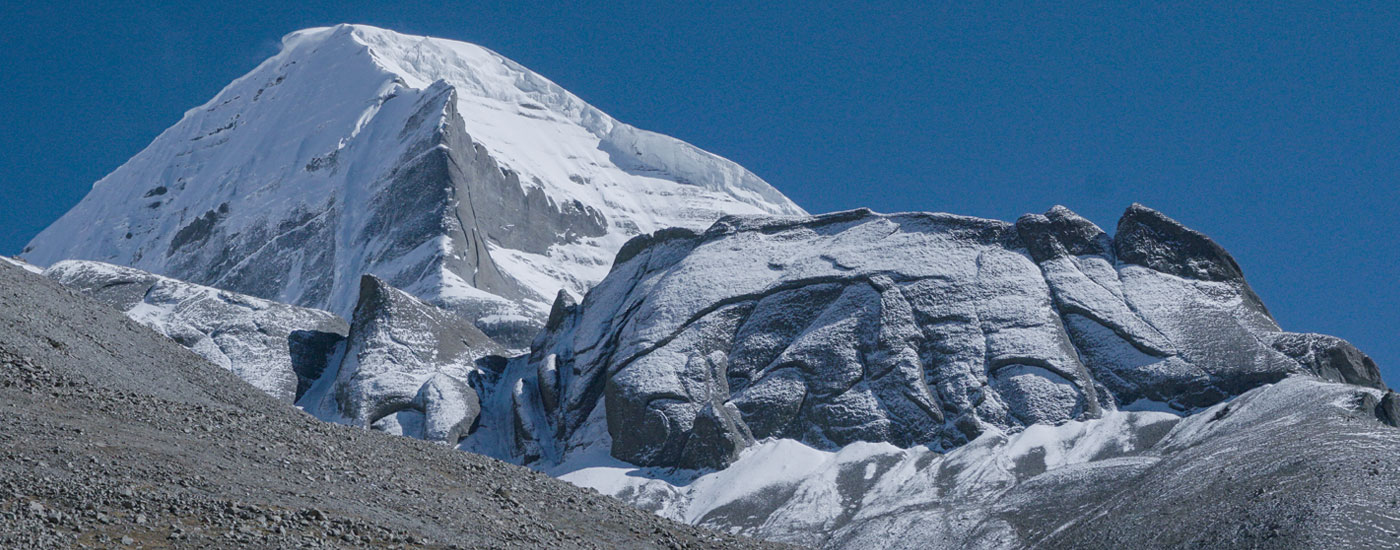
The Lhasa-Ali-Kailash-Manasarovar tour is the shortest flight-based option via Lhasa, cutting down travel time significantly, but whether it is the best option depends on your health, budget, and travel style
There is a shorter and more popular way of reaching Kailash Manasarovar by flying to Ali Gunsa (Ngari Gunsa Airport, Tibet). The pilgrims typically fly from Kathmandu or mainland China to Lhasa, take a domestic flight to Ali, then drive to Lake Manasarovar and Mount Kailash for Kora (circumambulation). Tour operators offer Kailash Manasarovar Yatra packages that depart from Lhasa to Ali Gunsa airport to avoid overland travel and save time. The airport at Ali Gunsa is about 300 kilometers from Manasarovar Lake, and tours generally include acclimatization, holy dips, and circumambulation of Mount Kailash.
Kailash, the highest mountain in the Himalayas, stands at 6714 meters above sea level. There are four great rivers that originate here: Yarlung Tsangpo at 4500 m, Manasarovar Lake at 4600 m, Karnali, Indus, Sutlej and Brahmaputra. Historically, these two natural wonders have been linked because of their religious significance. In Tibetan Buddhism, Mount Kangri Rimpoche is considered the meditating spot of Lord Shakyamuni. Hindus perform Kora (circumambulation) of the mountain as their ultimate penance. The peak is believed to be the abode of Lord Shiva and his consort Parvati.
Hindus believe the journey to Kailash is a way to cleanse their lives of all known and unknown sins with Lord Shiva's blessing. A mountain is believed to be the place where their first Saint Rishabh Anath achieved liberation. There are devotees and tourists visiting Kailash and Manasarovar Lake from around the world, especially from South and Southeast Asia. We offer special Kailash Manasarovar Tour packages each year. Please refer to the itinerary below and contact us directly to book.
In the summer, Air China and Himalayan Airlines fly direct flights from Kathmandu to Tibet's largest and busiest airport, Lhasa Gonggar International Airport, from Kathmandu to Lhasa. There will occasionally be a flight every day and sometimes there will be a flight every other day. There are direct flights from Gonggar International Airport to many Chinese cities, including Beijing, Chengdu, Shanghai, Guangzhou, Xian, Kunming, and Chongqing. All of these cities offer flights to and from Tibet, but Chengdu is the most popular. The number of flights departing Chengdu for Lhasa surpasses ten a day. Kathmandu to Chengdu and Lhasa the next day are the most frequent flights from Chengdu. We catch flights from Kathmandu to Chengdu and Lhasa if there is no daily flight from Kathmandu to Lhasa.
Ali Kailash Flight Path: It is possible to fly directly from a major hub (such as Chengdu or Lhasa in Tibet) to Ali (Ngari Gunsa) airport, which is located close to Mount Kailash and Lake Mansarovar.
Ali Kailash Short Drive: The overland drive from Kathmandu or central Tibet to Lake Mansarovar and Darchen (the base camp for Kailash) takes only a few hours.
Overall Duration: It will take about 9 days to complete the entire trip from Lhasa to Ali Lhasa, which is much faster than the standard 12 days from Kathmandu to Lhasa, Ali airport to Kailash - Ali, and Lhasa to Kathmandu.
Abode of Lord Shiva & Goddess Parvati: The mountain is traditionally considered to be a twin or alternative sacred seat to Mount Kailash in Tibet. According to tradition, Mata Parvati and Lord Shiva reside here, and it is commonly believed to be the place where Shiva married her.
Ravana’s Penance (Tapasya): The demon king Ravana performed intense penance here by offering his ten heads one by one to please Lord Shiva, earning immense divine power and grace.
Time-Saving / Shortest via Lhasa: Mount Kailash and Lake Manasarovar are only about 300 km away from Ngari Gunsa Airport (Ali), which makes it much faster than the 14-day overland drive from Lhasa.
Aerial Views: On the flight from Lhasa to Gunsa Ali or from Gunsa Ali to Lhasa, panoramic views of the Tibetan plateau, Mount Kailash, and Lake Manasarovar can be seen.
High Altitude Risk: Directly landing at Ali Gunsa Airport (at over 4,200 meters / 13,800 feet) allows you to skip the gradual acclimatization that comes with an overland drive or lower-elevation approach. There is an increased risk of acute mountain sickness (AMS). This route is only suitable for fit, healthy individuals. The Kailash Yatri must take risk, and no Kailash operator will take health risk operating smoothly this route. If Kailash Yatri takes risk and takes yatra this route, the operator company will operate this route.
13 May 2027 Day 01: Arrival Gonggar airport, drive to Lhasa
14 May 2027 Day 02: Day hike nearby Lhasa, Acclimatization
15 May 2027 Day 03: Sights in Lhasa includes Potala Palace
16 May 2027 Day 04: Drive to airport fly Ali, drive to Darchen
17 May 2027 Day 05: Acclimatization / addition tour Astapad
18 May 2027 Day 06: Drive to Yam Dwar, start walk Dirapuk
19 May 2027 Day 07: Trek to Dolma La 5636m. & Zuthulpuk
20 May 2027 Day 08: Trek to Chongdo and drive to Darchen
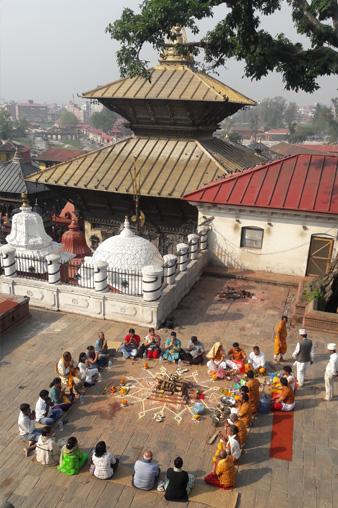
Continue to drive Manasarovar for fully Hindu ritual by Nepali
Pandit, do Rudrabhishek, Full moon night in Manasarovar
21 May 2027 Day 09: Early morning drive to Ali airport, fly to
Gonggar airport Xizang Tibet, flight to Chengdu airport China
13 May 2027 (Thursday) Day 01: Arrival Lhasa Gonggar airport, the Tibetan tour guide welcomes all Kailash Yatri with Tibetan Khata (white garland). From the airport, everyone is driven to Lhasa city in a minibus or bus. We travel about 62.5 km away from Gonggar airport and it takes about an hour or bit more. Everybody enjoys the amazing views of the naked hills, the settlements at the bottom of the hills and the agricultural land full of crops along the way. Check in at the hotel.
14 May 2027 (Friday) Day 02: The Lhasa Nanshan Park (South Mountain Park) can be walked and hiked on a day trip. The walk spans the Lhasa River and takes between 2 and 4 hours. It reaches altitudes of 4,100 meters (13,450 feet) and offers panoramic views of the Potala Palace and the city of Lhasa. You can choose any hill that is suitable, or you can ignore hiking and acclimate in Lhasa.
15 May 2027 (Saturday) Day 03: A full day of guided sightseeing in Lhasa, including the Potala Place and the local market Bharkhor. The city of Lhasa, capital of the Tibet Autonomous Region, is surrounded by the Himalayan mountains and steeped in history and culture. The city is a major center for Tibetan Buddhism and a hub for Tibetan culture and religion. Its abundant sunshine makes it known as the "City of Sunshine" Lhasa is a unique combination of ancient traditions and stunning natural beauty that makes it an ideal destination for travelers of all ages.
 Watch Kailash Tour Testimonials Video
16 May 2027 (Sunday) Day 04: We fly from Gonggar Airport to Ali Gunsa Airport (4500m.). Then we drive for 3 hours to Darchen, covering a distance of 300KM. This high-altitude commercial airport is located in the Ngari Prefecture of Tibet, China, and is known as Ali Gunsa airport. Mount Kailash and Lake Manasarovar are accessible from this place, which is important for travelers. Located at a high altitude of 4,274 meters or 14,022 feet, the airport is known for its high altitude.
Located in the Ngari Tibet Autonomous Region, Ali Kunsha Airport serves the town of Shiquanhe as a military and civil airport. A small town in western Tibet, Darchen serves as a gateway for pilgrims and trekkers visiting Mount Kailash as well as the circle / Pradakshina. Aside from its geographic significance, Darche has a great deal of historical significance. A spiritual center where people of various faiths (Buddhism, Hinduism, Jainism, and Bon Po) converge, drawn to the revered Mount Kailash. Those who do the 53-kilometer (32-mile) Kora circuit around the mountain rely on the village for essential service.
17 May 2027 (Monday) Day 05: Acclimatization in Darchen, Day hiking or addition tour to Astapad. If taking addition tour, morning after breakfast and drive to Serlung Gompa, walk for 10 minutes to Astapad and Darshan Kailash South Face and Nandi Parvat very closed. There is a Buddhist monastery called Serlung Gompa and hill called Astapad is revered by both Jains and Buddhists as a sacred site. "The mountain hills of the eight steps" is also known as Astapad. The nearby sacred site of Astapad is located at the foot of South face of Mount Kailash, in a mountain amphitheater. According to Jain mythology, Astapad is the place where the first Jain Tirthankara attained nirvana. You can view Mount Kailash's south face as well as Nandi Parvat from Astapad, a mountain amphitheater at the base of Mount Kailash. Additionally, Nandi Parvat, which lies near Mount Kailash, is visible from Astapad. Astapad is located about 5 kilometers away from Darchen.
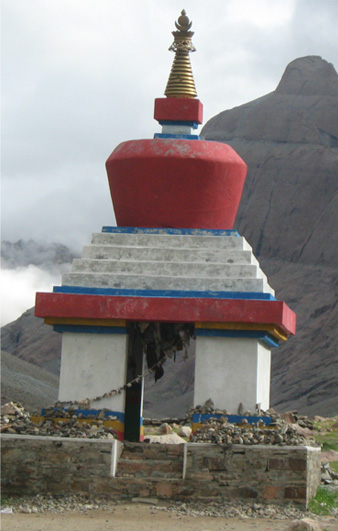
Watch Kailash Tour Testimonials Video18 May 2027 (Tuesday) Day 06: From Darchen, drive to Yam Dwar (4860m.), and walk to Dirapuk (4860m.) where the Kailash Parikrama (circumambulation) begins. The distance between Yam Dwar and Dirapuk is 12 kilometers. There is a total distance of 53km in Kailash Parikrama, and we can choose between walking or riding a pony or horse for 38 kilometers after reaching Yam Dwar. To cover the remaining distance, a blue bus that is environmentally friendly will be used.
19 May 2027 (Wednesday) Day 07: The best place to view Kailash Parvat is in Dirapuk, which is just 5 km away from Kailash North Face. Everyone reaches here on foot or by pony riding, feeling like they have reached a haven. Charan and touch Kailash is now closed by Tibet Authority. Since we need to walk 22 kilometers from Dirapuk to Zuthulpuk today, this will be the longest walking. day. From Dirapuk, we climb to Shivasthal, Ganesh Kund, and finally Dolma La Pass (5636m.), the highest point of our journey. There are 7- 8 hours of walking between Dirapuk and Zuthulpuk. After Dolma La pass, walking down to Shapje Datok and following the Lham Chu River to Zuthulpuk, we'll arrive at Zuthulpuk, checking and overnight stay here.
Watch Kailash Tour Testimonials Video20 May 2027 (Thursday) Day 08: Morning Walk to Chongdo and drive to Darchen, we collect all bags before Kailash kora, deposited drive to Manasarovar Kora (Pradakshina) starting from Darchen. Most likely, "Mansarovar circle" refers to Hinduism's, Buddhism's, Jainism's, and Bonpo's practices concerning the circumambulation of Lake Mansarovar. As part of the Kailash Manasarovar tour, reach Chiu Monastery at the bottom of the lake, which is where Hindu rituals begin for the Manasarovar Lake. During the Kailash Manasarovar Yatra, Nepali Pandits perform Rudrabhishek, Hawan, and Aarti pooja at Manasarovar Lake. In order to purify oneself and gain Lord Shiva's blessings, one prays, chants Shiva mantras, and performs rituals like Tarpan (offering holy water). It is considered highly auspicious and spiritually potent to visit Lake Manasarovar during a full moon night. In addition to enhancing the lake's spiritual energy, the reflection of the full moon on its surface is believed to offer pilgrims and visitors a powerful and sacred experience. Full moon night in Manasarovar Lake.
21 May 2027 (Friday) Day 09: An early morning drive of approximately 250 km is necessary to reach Ngari Gunsa Airport (Ali Airport). You would typically drive northwest across the Tibetan plateau for about four hours. Having said that, it is crucial to understand that this is a high-altitude, rugged route that requires planning and should not be taken lightly. We fly from Ali Airport to Gonggar airport Xizang Tibet, continue flight to Chengdu airport & fly to final destination.
Note: Flight cancellations or any delays caused by unpredictable high-altitude weather conditions are generally not the fault of airlines or Kailash Yatra operator and no bear any extra cost.
 Per Person USD 5,500 (Double / Twin room Sharing)
Per Person USD 5000 (Single room)
Extra cost if required for Kailash Circuit:
Horse ride during the Parikrama 1 horse for 3 days USD 400
(Directly payable to the Tibetan guide)
Porter for carrying small bag for 3 days round Kailash USD 200
 Oxygen is less at higher altitudes. The inclement weather and high altitude induces certain illness generally not encountered over the plains. Headache, nausea, lassitude, lethargy, breathlessness, general uneasiness [malaise], high irritability, light loss of balance, disorientation, incoherence and insomnia are a few. It is common to all irrespective of the age, sex and physical fitness. Gradual acclimatization is the best answer. Tranquilizers, sleeping dose and strong anti-biotic must be avoided. Some of symptoms indicate that the body mechanism is readjusting to new environments. The best idea is deliberately slow down all the activities and follows the guidelines below:
Om Namo Shivaya ! Jaya Bhole Nath !! Har Har Mahadev!!!
What our client's says about Kailash yatra and tour operator





monterosa-nepal.com nepalexpedition.com
© kailashtourpackage.com - 2026
Online Payment 
Terms & Conditions
Site Design By: Webdesigninnepal.com